Wednesday, October 15, 2025

Return of the Spider - James Patterson - Full Review


Introduction & Context

With Return of the Spider, James Patterson delivers a provocative addition to the long-running Alex Cross saga—one that reaches back into the earliest days of his career and resurrects shadowy ties from his past. Ostensibly a sequel to Along Came a Spider, the novel reframes familiar ground by probing how the cat-and-mouse game between Cross and one of his most dangerous adversaries began in the first place—and whether that beginning still holds hidden truths.

In many ways, this is a book about origins, memory, and the inevitability of confrontation. Patterson draws on the legacy (and lore) of the Cross saga, leveraging nostalgia for longtime fans while trying to inject fresh tension and stakes. The result is a thriller that speaks both to where Cross has been—and where he might still be going.

Below is a detailed breakdown of the book’s strengths, weaknesses, themes, pacing, characters, and overall impact for readers.


Synopsis (Without Major Spoilers)

In Return of the Spider, police discover a hidden journal titled Profiles in Homicidal Genius, one kept by the serial killer Gary Soneji. That journal is more than a catalog of crimes: it hints at missteps and blind spots in a past investigation involving a younger Alex Cross. The clues lead Cross back to his rookie days, retracing how Soneji evolved from a substitute teacher into a methodical murderer, and what pivotal decisions Cross made along the way.

As Cross revisits old evidence and confronts suspects long presumed dormant, he begins to suspect that Soneji’s designs were never purely reactive—they were anticipatory. The plot drives him—or perhaps drags him—back into a web of moral ambiguity, where the past is not just a fixed chain of events but a living trap.

In classic Cross fashion, he must balance solving the case with protecting those he loves, all the while questioning how much of what we remember (or believe) can be trusted.


What Works Well

1. Revisiting the Mythology

One of the novel’s most compelling aspects is how it leans into Cross’s backstory. For longtime readers, the nostalgia factor is strong: echoes of Along Came a Spider resonate throughout. Patterson teases out connections that feel intentional rather than tacked on, and he uses the journal device to open new lines of inquiry into old plot threads. This retrospective framing gives fans a sense of continuity while adding new layers.

2. Cat-and-Mouse Dynamics

The tension between Cross and Soneji remains one of the most intriguing in the series. In Return of the Spider, Patterson heightens that by making Soneji less a reactive opponent and more a long-game planner, as though his chessboard was laid years ago. The strategic interplay, the clues planted as misdirection, and the psychological probing—these elements create suspense that pulses throughout.

3. Pacing and Momentum

For much of the narrative, Patterson sustains a brisk pace. Chapters are compact, momentum rarely stalls, and narrative tensions (cliffhangers, sudden reversals, shifting motives) pull the reader forward. Even when the plot delves into forensic detail or diary revelations, the forward push remains—rarely letting the story linger too long in one place.

4. Moral Ambiguity & Memory

A central theme here is that memory is mutable, that what Cross—or any investigator—thought was true may have been incomplete or consciously shaped. As he re-examines evidence, he’s forced to wrestle with uncomfortable possibilities: that youthful errors or assumptions may have allowed Soneji room to grow. That tension—between idealism and fallibility—gives the novel depth beyond procedural thrills.

5. Emotional Stakes

Patterson underlines that Cross is not just a detective but a human being with family, vulnerabilities, regrets. The new revelations from the journal threaten not only his professional reputation but his internal sense of integrity. The pull of past mistakes affects how he engages loved ones and suspects in the present. That personal dimension prevents the story from becoming a sterile puzzle.


Weaknesses & Limitations

1. Predictability in Places

While the overarching twist—Soneji’s long game—carries weight, some mid-plot shifts and reveal mechanics feel familiar from previous Cross novels or crime thrillers generally. A perceptive reader might anticipate certain double-crosses or red herrings before they fully land. The device of the hidden journal, for example, is hardly new; what determines the freshness is how Patterson personalizes it to Cross.

2. Limited Novelty for New Readers

Because Return of the Spider leans heavily on backstory and callbacks, its emotional resonance depends on familiarity with Cross’s history. For readers new to the series, the motivations, stakes, and relevance of certain revelations may feel underexplained or derivative. The novel reads best when approached as part of a continuum, not a standalone entry.

3. Compression of Complex Threads

With multiple layers—past, present, mental puzzles, false leads—the book sometimes feels overstuffed. There are stretches where the novel tries to juggle too many suspects, side plots, or overlapping motives. While the pacing often keeps this manageable, a few scenes could have benefited from more breathing room or trimming of peripheral tangents.

4. Dialogue & Expository Heft

At times, the dialogue leans on expository triggers—characters explaining for the reader what they already “should” know, or summarizing past events to boot. Such moments break immersion slightly. Moreover, some characters (especially minor ones) remain relatively flat or gesture-driven rather than fully rounded.


Key Themes & Motifs

  1. Memory & Revision: The book continually asks how much of what we believe to be the truth is shaped by perspective, bias, or omission. Cross’s willingness to revisit his own misinterpretations underscores the fragility of “certainty.”

  2. Origins & Legacy: In charting how Soneji became who he is, the narrative explores the roots of evil—not simply in acts, but in small choices, missed warnings, and latent danger. Cross confronts how his own legacy might be haunted by early oversights.

  3. Moral Responsibility: Cross’s internal struggle is whether the detective is responsible not only for catching criminals but for owning mistakes. The tension between idealism (justice, protection) and realism (missteps, fallout) is central.

  4. Psychological Games: Soneji is more than a brute—he is an architect of manipulation. The interplay between predator and pursuer is as cerebral as it is visceral, with misdirection, timing, and deception all tools of the trade.

  5. Family & Identity: The Cross character remains tethered to family, community, and personal code. Threats to those connections raise stakes beyond mere detection—this is about the self, integrity, and what one must live with.


Character Analysis & Dynamics

  • Alex Cross remains the emotional and narrative fulcrum. Patterson revisits a younger, less confident version of him, forcing confrontation with internal doubts and early errors. His psychological arc is as important as the external chase.

  • Gary Soneji is reimagined here less as a reactive villain and more as a long-term planner. His voice, through the journal, offers insight into the mind of someone who believed he was always a few steps ahead. That shift gives him renewed menace.

  • Supporting Cast (investigators, witnesses, older versions of characters) serve well as foils or mirrors, though many of them are constructed to support the central duel. A few characters break away with surprising agency, but most remain in relative shadow.

  • Interpersonal Tension: Cross’s relationships (colleagues, family, subordinates) are strained by the revelations. Patterson uses these moments to puncture the investigative narrative with emotional interludes—they don’t always land perfectly, but they root the stakes in human connection.


Pacing, Structure & Narrative Flow

The novel is structured to alternate between present-day investigation and archival revelation (via journal entries, flashbacks, or reconstructed scenes). This back-and-forth reinforces theme and suspense: as Cross uncovers something in the present, he is immediately forced to re-evaluate a past moment.

Patterson’s short-chapter style works in his favor here: each chapter tends toward a micro-cliffhanger or a pivot, which makes it hard to set the book down. The narrative speed is brisk, though the density of overlapping threads occasionally triggers moments where the story feels compressed or crammed.

Overall, the structure is effective. It emphasizes the idea that the past and present are in conversation—and that a detective’s past could be bait for the future.


Reader Appeal & Audience

  • For longtime Alex Cross fans, Return of the Spider will likely feel like a treat—a chance to deepen mythos, revisit pivotal moments, and see familiar dynamics reframed. The callbacks, references, and connective tissue reward sustained series investment.

  • For thriller readers, the book offers a cerebral cat-and-mouse game with forensic intrigue, misdirection, psychological stakes, and procedural movement. While not radically reinventive, it’s solid in the genre mold.

  • For newcomers, the book is less ideal as a standalone entry. The emotional weight of revelations, the impact of callbacks, and the tension of legacy make more sense when one already knows Cross’s trajectory.


Overall Evaluation

Return of the Spider is a thoughtful, suspenseful entry in the Alex Cross canon. It doesn’t radically overhaul the franchise, but it doesn’t need to. Its strength lies in deepening rather than reinventing: peeling back layers of Cross’s past, reframing conflicts, and casting long shadows forward.

While certain plot mechanics feel familiar and the density of threads occasionally overreaches, Patterson largely succeeds in crafting a thriller that balances momentum and introspection. It’s a novel for fans who want more than just a chase—who want consequences, regret, and revelation.

On a scale (for fans and genre readers), I’d place it a strong “very good” rather than a perfect classic. It’s not flawless, but it earns its place in the Cross mythos and offers genuine moments of tension, shock, and self-reflection.

If you’re deeply invested in Alex Cross, Return of the Spider is a welcome return. If you’re just dipping in, it may prompt you to go back and read Along Came a Spider (and beyond) so you can fully taste its resonance.

🕷Get Return Of The Spider On Amazon!🕷

Tuesday, October 14, 2025

I Am Giorgia: My Roots, My Principles by Giorgia Meloni - Full Review


Overview & Structure

I Am Giorgia: My Roots, My Principles is the English-language edition of the memoir by Giorgia Meloni, translated (in part) by Sylvia Notini and published by Skyhorse. The book runs about 288 pages, and aims to give readers a personal, reflective account of Meloni’s life, values, and political and emotional development.

Meloni frames the memoir not merely as an autobiography but as a statement of identity and principle. She positions herself as a person who has too often been spoken about by others, rather than allowed to speak for herself. Through a mixture of personal recollection, family narrative, reflections on faith and politics, and cultural references, she traces how her early years formed her convictions and prepared her for public life.

The structure is broadly chronological, but interspersed with moments of thematic reflection — on motherhood, identity, faith, and what she views as the tensions of Italian and European politics. The memoir does not confine itself to a “rise-to-power” story; it also attempts to lay out a moral and ideological portrait.


What Works Well: Strengths

1. Personal Voice & Vulnerability

One of the strong elements of the book is Meloni’s willingness to expose emotional vulnerabilities and to narrate personal scars. She writes of her relationship with her mother, her sister, her grandparents, and also of the absence of her father. She recounts episodes of bullying and of being judged on appearance (especially weight, looks) during adolescence. These revelations — while selective — humanize a figure often seen only in political caricature. The emotional backbone of the memoir gives it narrative weight and helps the political persona feel less distant.

2. Clarity of Conviction

Meloni is quite clear about what she believes. She does not shy away from controversial claims or provocative stances. Throughout the memoir she presents her worldview in uncompromising terms: about the primacy of family, of tradition, of sovereignty, and of moral anchors (particularly faith). This coherence (or consistency) of ideological voice may appeal to readers seeking more than a bland or diluted political memoir.

3. Cultural & Pop-Culture Resonances

The memoir is peppered with references to music, literature, pop culture, and even television shows, which serve both to lighten the tone and to reveal Meloni’s manner of thinking. She speaks of listening to Michael Jackson to learn English, or using Tolkien references, or quoting contemporary culture. These touches help situate the text not only in the political realm but in everyday life.

4. Narrative of Overcoming

Meloni crafts a narrative of self-transformation: a “bullied, ordinary girl” from a modest background in Rome, who, through perseverance and conviction, becomes a figure on the national stage. Such a story possesses a classic upward arc, and for many readers it is compelling as a tale of resilience, grit, and moral self-assertion.


What Is More Problematic: Critiques & Omissions

1. Selective Memory & Omitted Context

A major critique is that Meloni’s account is selective. While she speaks candidly about many things, there are significant political and historical issues she largely bypasses or minimizes. For instance, her early association with the Movimento Sociale Italiano (MSI), a post-fascist party in Italy, and the ideological baggage that entails, is not fully confronted. Critics note that she “sidesteps the party’s fascist roots” and does not deeply reckon with that legacy. The memoir adopts an outsider posture vis-à-vis the political establishment, yet conveniently omits or softens parts of her own political genealogy.

She frames her narrative largely as one of defiance against elites, but much less as one of internal dissent, ideological struggle, or reckoning with extremism. For readers who expect a more self-critical or historically grounded reckoning, the omissions may feel glaring.

2. Tension Between Persona & Substance

While Meloni’s personality comes across strongly, in many passages the memoir leans more toward myth-making than granular policy or governance reflection. There is less on the internal workings of government, trade-offs, or detailed political strategy than one might hope from a political memoir by a sitting prime minister. In other words, the political content sometimes lags behind the rhetorical posture.

Some readers may come away wishing for more substantive engagement — more about how she conceives of statecraft, the balancing of political alliances, or the challenges of governing in a fractious coalition environment. The memoir is more about “why I believe” than “how I govern.”

3. Polarizing Tone and Us vs. Them Framing

The style of the book often sets up a sharp opposition between “us” (the people, the rooted, the faithful) and “them” (the elites, the cosmopolitan, the technocrats). This binary tone can lend itself to polemic more than nuance. Critics have observed that Meloni frequently casts conservative values as under siege by a monolithic, dismissive elite. While that tension is genuine in many political debates, the rhetoric occasionally sacrifices complexity for dramatization.

4. Emotional Emphasis Over Analytical Depth

Because the memoir invests so much in emotional narrative and personal history, the analytic or interpretive sections sometimes feel thinner in comparison. Complex topics — immigration, European sovereignty, the varying pressures on national identity — get touched upon, but often in broad strokes rather than in meticulously argued chapters. For those expecting a deeply reasoned policy treatise, the book may feel wanting.


Notable Themes & Motifs

Identity & Belonging

Meloni returns often to her identity as a woman, mother, Italian, Christian. These are not just biographical descriptors but foundational claims. She argues that modern politics has too often stripped identity of its substance, turning democratic citizens into abstract units rather than persons rooted in communities.

Faith & Moral Order

Faith is a central pillar in her worldview. She speaks of religion not as a private matter but as a guiding principle for social cohesion and moral anchor. She views many modern ideologies — secular or liberal — as eroding moral norms and cultural continuity.

Roots, Continuity & Memory

She regards roots (family, regional tradition, historical memory) as critical to a stable society. In her narrative, the dislocated individual in a transnational technocratic world is vulnerable. Thus, her memoir is partly a defense of rootedness — genealogical, cultural, spatial — against what she sees as de-rooting forces.

Resistance to Elites & Populist Undertones

Throughout, there is a posture of resistance: elites are dismissive, distant, condescending; she positions herself as speaking “from below,” as someone outsiders did not expect to succeed. That anti-elite rhetoric is a classic populist idiom. At times, it gives the book its sharp edge; at others, it underwrites the risk of oversimplification.


Readability & Style

The prose is accessible, direct, and occasionally emphatic. Meloni uses anecdote and emotional narrative more than dense policy exegesis. The book moves relatively quickly, aided by interludes of reflection and cultural references. Some readers may find the rhetorical flourishes or occasional hyperbole distracting; others may appreciate the clarity and urgency of her voice.

The translated edition — as all translations must — sometimes smooths over linguistic texture, but the emotional register remains intact. The memoir doesn’t read as a dry or academic text; it is more of a political-literary hybrid.


Audience & Impact

This book is unlikely to convert staunch opponents of Meloni’s politics — it instead crystallizes her brand for supporters and for international observers wanting insight into her moral, psychological, and ideological foundations. For admirers, it offers confirmation: a personal backstory aligned with the convictions she champions. For skeptics, it offers material — both rhetorical and narrative — to critique and engage with.

Its impact may lie less in opening new intellectual terrain and more in giving voice to a figure often caricatured in Western media. It invites readers to see her as more than a political label — as a human who believes deeply (and sometimes contestably).


Verdict

I Am Giorgia: My Roots, My Principles is a striking and evocative political memoir. It succeeds best as a portrait of self — a mixture of confessional storytelling, ideological declaration, and moral posture. Its emotional core and clarity of conviction are compelling.

Yet it is limited by its selective memory, by occasional rhetorical simplifications, and by a relative lack of deep analytical or policy detail. Readers hoping for a richly reasoned political account or a granular treatment of governance may find the book wanting in places.

In sum: for those interested in the personal side of contemporary European politics, in identity, and in the moral dimensions of public life, Meloni’s memoir is a valuable read — vivid, forceful, and unapologetic. But it should also be read critically, with awareness of what is emphasized and what is glossed over.

🕮Find Giorgia Meloni's Book On Amazon!🕮

Defend the Border and Save Lives: Solving Our Most Important Humanitarian and Security Crisis -Review


Tom Homan, former Acting Director of U.S. Immigration and Customs Enforcement (ICE), brings decades of frontline experience to his book Defend the Border and Save Lives. In this work, Homan argues that the border crisis facing the United States is not merely a political or logistical challenge but a profound humanitarian and national security emergency. The book blends personal experience, policy analysis, and moral conviction to advocate for a renewed, disciplined approach to immigration enforcement.

Homan begins by explaining the scope of what he calls the border’s “humanitarian disaster.” He recounts real-life stories from his time on the ground, including encounters with human traffickers, cartel smugglers, and migrants who suffered greatly during their journeys. Through these stories, he emphasizes that illegal immigration is not a victimless act—it often results in suffering, exploitation, and loss of life. His experiences illustrate how criminal networks profit from chaos and how weak enforcement encourages more dangerous journeys for migrants seeking entry into the United States.

From the start, Homan presents his case in plain, direct language. He takes the reader behind the scenes of immigration enforcement, revealing both the challenges and frustrations faced by officers and agents tasked with securing the border. He criticizes what he sees as the inconsistent policies of multiple administrations, arguing that political agendas often override the safety of both migrants and American citizens. His central message is clear: effective border enforcement saves lives by discouraging dangerous illegal crossings and disrupting the criminal enterprises that exploit vulnerable people.

The book is organized around several core themes. The first is Homan’s diagnosis of the crisis. He describes a system overrun with loopholes, policy reversals, and political indecision. He argues that lax enforcement and policies that encourage illegal entry have transformed the border into a humanitarian nightmare. He connects these failures to issues such as drug trafficking, human smuggling, and the spread of organized crime, portraying the border as a major front line in the defense of national security.

The second major theme focuses on debunking what Homan sees as misconceptions about immigration and enforcement. He challenges the belief that strict border control is inherently anti-immigrant, insisting that a secure border protects both citizens and migrants. He portrays border enforcement as a moral duty, meant to save lives by preventing exploitation and dangerous crossings. This humanitarian justification underpins much of his argument and separates his stance from purely political rhetoric.

A third section of the book is dedicated to Homan’s firsthand accounts. Drawing from decades of experience, he shares stories that illustrate the human costs of weak policies. These anecdotes are both personal and persuasive, describing moments of rescue, loss, and confrontation with organized crime. His storytelling gives readers a sense of the human element behind the statistics, reinforcing his message that compassion and enforcement must coexist.

In the final chapters, Homan outlines his proposed solutions. He calls for increased resources for border agents, expanded physical and technological barriers, mandatory E-Verify for employers, and the closing of legal loopholes that he believes encourage illegal entry. He advocates for a national commitment to immigration law that combines humanitarian compassion with firm enforcement. Homan also emphasizes accountability among policymakers, arguing that political leaders must stop using the border as a talking point and start treating it as a national priority.

One of the book’s greatest strengths is Homan’s credibility as an experienced law enforcement official. His career provides him with real-world authority on border issues, and he speaks with the confidence of someone who has seen the problem firsthand. His writing is straightforward and accessible, appealing to readers who want practical insight rather than abstract theory. The moral clarity of his argument—that secure borders protect everyone involved—is likely to resonate with readers who value both security and compassion.

However, the book’s weaknesses stem from its strong partisan tone. Homan’s unwavering stance and combative style may alienate readers who prefer a more balanced analysis or who approach immigration from a humanitarian or economic perspective. While his personal experiences are compelling, the book offers limited engagement with counterarguments or deeper discussions of root causes, such as poverty, instability, or foreign policy. Readers looking for a nuanced academic treatment of immigration policy may find the book too one-sided.

Despite this, Defend the Border and Save Lives succeeds as a passionate and persuasive call to action. Homan’s writing is fueled by conviction and firsthand experience, and his emphasis on the humanitarian aspect of border security is both unexpected and powerful. His central message—that enforcement and compassion are not opposites—sets the book apart from purely political commentary. He argues that turning a blind eye to illegal immigration leads to more suffering, not less, and that protecting the border is ultimately an act of moral responsibility.

This book will appeal most to readers who believe that the United States must take a stronger stance on border enforcement, as well as those interested in understanding how frontline officers view the crisis. It is not an academic study but a personal manifesto rooted in experience and emotion. For readers seeking to understand the border debate from the perspective of those who have lived it daily, Homan’s book provides an unfiltered, impassioned, and deeply personal viewpoint.

In conclusion, Defend the Border and Save Lives is a forceful defense of border security framed as a humanitarian cause. Tom Homan’s firsthand experience, direct language, and moral conviction make the book a compelling read, even when its tone becomes partisan. It is both a warning and a call to action, urging readers and leaders alike to confront the realities at the border and to recognize that securing it is, in Homan’s words, a matter of saving lives.

Get Defend The Border And Save Lives On Amazon!

Monday, October 13, 2025

Save America by Donald J. Trump – In-Depth Review


Introduction and Context

Save America, published on September 3, 2024, is a visually driven political book authored by Donald J. Trump through Winning Team Publishing. The book offers a retrospective look at Trump’s presidency, blending photographs, short commentaries, and political messages that highlight his perspective on leadership, legacy, and the future of the United States. Rather than being a traditional memoir or policy discussion, Save America functions as a curated photographic chronicle and political statement.

The book’s release came at a time when Trump’s political career was again at the forefront of national discussion, making this publication both a reflection of his time in office and a continuation of his effort to shape public perception of his tenure.


Structure and Presentation

Save America spans hundreds of pages filled with full-color images, many of which occupy entire spreads. Text is limited and typically presented as short captions or bold statements. The photographs capture Trump in various settings—at rallies, official meetings, and public appearances—each chosen to reinforce his image as a strong and unrelenting leader.

The design is polished and high-quality, giving the book a coffee-table style appeal. However, it has been criticized for its lack of contextual information. Many images lack captions identifying dates, locations, or individuals, leaving the reader with a visual narrative that feels disconnected from historical detail. The absence of a table of contents or index also makes it difficult to navigate.

Overall, the structure favors spectacle over substance. The repetition of crowd scenes, triumphant gestures, and photo opportunities gives the impression that the book was designed more to inspire loyalty and nostalgia than to inform or analyze.


Tone and Rhetorical Style

The text of Save America is written in Trump’s signature style—direct, emphatic, and often dramatic. The captions and statements use capital letters, short sentences, and punchy phrasing to emphasize key points. The book mixes patriotic declarations with attacks on political opponents, the media, and what Trump calls the “establishment.”

Rather than developing complex arguments, the commentary relies on assertion and symbolism. Trump’s narrative portrays himself as a defender of American values, a victim of political persecution, and a man standing alone against corruption and deceit. His words often mirror his campaign rhetoric, focusing on strength, nationalism, and defiance.

There are also moments where the tone turns conspiratorial or personal, referencing political rivals and critics in provocative ways. This approach will appeal to readers who admire Trump’s combative style but may alienate those seeking objective reflection or balanced commentary.


Major Themes

1. Leadership and Legacy
The book positions Trump as a transformational figure whose presidency changed the course of the nation. The imagery reinforces his personal influence on the direction of American politics, depicting him as central to every event and decision.

2. Patriotism and National Pride
Patriotic themes run throughout Save America. The American flag, cheering crowds, and military symbols appear repeatedly. The message is clear: Trump represents a return to traditional American values and pride.

3. Conflict and Resistance
Trump frequently presents himself as a victim of unfair attacks by the media, political opponents, and powerful institutions. The book uses this theme to frame his political struggles as proof of his courage and righteousness.

4. International Power and Diplomacy
Photographs of Trump meeting foreign leaders emphasize his role on the world stage. The images project confidence and authority, suggesting that his presidency restored respect for American power abroad.

5. The People’s Movement
Crowd scenes are among the most frequent images in Save America. They symbolize Trump’s connection with ordinary Americans and serve as visual evidence of his continued popularity and influence.


Strengths

Save America succeeds in creating a strong visual and emotional impact. The layout, printing, and photography are high quality, giving the book an impressive aesthetic presence. For supporters and collectors, it functions as a symbol of identity and loyalty. Its simplicity and emphasis on bold imagery make it easily accessible, even for readers uninterested in long-form political writing.

The book also demonstrates Trump’s understanding of modern political communication. By relying on visuals rather than text, it captures attention quickly and conveys messages through emotion rather than argument. In an era dominated by social media and image-driven politics, this strategy is highly effective.


Weaknesses

The book’s greatest weakness is its lack of depth. It provides no detailed analysis of policies, no discussion of controversies, and no introspection. The narrative is one-sided, focusing exclusively on triumphs while omitting context or criticism. Readers seeking genuine insight into the decisions, challenges, or complexities of Trump’s presidency will find little substance.

The repetition of similar images can also make the book feel monotonous. Many pages display Trump in nearly identical poses at rallies or events, reinforcing the same message without adding new perspective. The absence of factual explanation or clear chronology makes it difficult to view Save America as a serious historical resource.

Additionally, some of the claims and captions rely heavily on personal opinion and rhetoric rather than verifiable information. This further positions the book as a work of promotion rather than reflection.


Reception and Public Response

Upon release, Save America achieved strong sales, particularly among Trump’s supporters. It quickly became a best-selling political title, fueled by enthusiasm from his base and collectors of presidential memorabilia. Reviews from mainstream critics, however, were generally unfavorable. Many described it as more of a campaign piece than a genuine work of literature or history.

Among admirers, the book was praised for its visual appeal and for offering a proud, unapologetic defense of Trump’s record. Among detractors, it was criticized for promoting misinformation, lacking balance, and serving as a vehicle for political messaging rather than documentation.


Historical Value

As a historical artifact, Save America provides insight into how Trump wishes his presidency to be remembered. It captures the image he wants to present to his followers—strong, defiant, and larger than life. From a scholarly perspective, the book is useful not for its factual content but as a primary source for understanding modern political branding and image-making.

Future historians may study Save America as an example of how 21st-century leaders used media and visual storytelling to shape their legacy. It represents the intersection of politics, personality, and publicity in the digital age.


Final Assessment

Save America is a striking but polarizing work. It offers a bold and emotional portrayal of Donald Trump’s vision of himself and his time in office. As a visual document, it is impressive and impactful. As a written account, it lacks depth, objectivity, and critical analysis.

For Trump supporters and collectors, it serves as a valuable keepsake and a symbol of shared identity. For neutral or critical readers, it may feel more like political propaganda than serious reflection. Ultimately, Save America succeeds on its own terms—it captures attention, stirs emotion, and reinforces Trump’s personal brand—but it does not provide the kind of insight or balance that would make it a meaningful contribution to political literature.


In conclusion, Save America is not a book designed to persuade skeptics or engage in policy debate. It is a visual celebration of one man’s image and message, intended for those who already believe in his vision. As such, it stands as both a striking example of modern political media and a revealing portrait of Donald Trump’s enduring influence on American culture.

Get Save America By Donald Trump On Amazon!

The Real Charlie Kirk by Dick Morris Full Review

 The Real Charlie Kirk by Dick Morris is an unflinching and politically charged biography that takes readers deep into the life, rise, and influence of one of America’s most outspoken conservative figures. Scheduled for release on November 4, 2025, this book explores the story of Charlie Kirk, the founder of Turning Point USA, and his evolution from a young political activist to a nationally recognized commentator and thought leader on the American right.

Dick Morris, a veteran political strategist known for his sharp analysis and ability to read the political pulse of America, approaches this project with both journalistic rigor and insider knowledge. He frames Kirk’s story not just as a personal biography, but as a case study in how new media, grassroots activism, and generational change have reshaped modern conservatism.

The book begins by tracing Kirk’s early years, illustrating how his childhood experiences, educational background, and early encounters with political discourse shaped his worldview. Morris paints a picture of a young man who recognized early on that college campuses were fertile ground for ideological battles. From this foundation, Kirk’s decision to launch Turning Point USA becomes not only understandable but inevitable. The book details the challenges of founding a youth-focused conservative organization in a landscape dominated by liberal voices, showing how Kirk’s strategic thinking and relentless energy helped him turn a small student effort into a national movement.

Morris does not shy away from controversy. He explores the criticisms Kirk has faced, from accusations of extremism to debates over his methods and rhetoric. However, Morris positions these moments within the broader context of America’s cultural and political divides, suggesting that Kirk’s approach—while polarizing—is a reflection of a larger generational shift. Through careful analysis, Morris argues that Kirk embodies the digital age of conservatism, where influence is measured not just by votes or speeches but by viral clips, social media reach, and the ability to frame narratives in real time.

A central strength of The Real Charlie Kirk lies in its portrayal of the intersection between personality and politics. Morris highlights Kirk’s communication skills, his understanding of how to engage younger audiences, and his knack for translating complex issues into sharp, relatable soundbites. The book shows how Kirk’s success stems not just from ideology but from his grasp of media strategy and cultural momentum.

The narrative also explores Kirk’s relationships with key figures in conservative politics, including his interactions with political leaders, influencers, and media personalities. Morris uses these relationships to illustrate how Kirk has navigated internal divisions within the right, from libertarians to populists, and how he has maintained his relevance through shifting political winds.

As the chapters unfold, Morris presents Kirk as a figure who has both redefined and challenged the traditional conservative establishment. Rather than portraying him as a one-dimensional provocateur, Morris positions him as a catalyst for change, someone who has reshaped how young Americans engage with political ideas. He examines the philosophy behind Kirk’s activism—faith, capitalism, and American exceptionalism—and how those values drive his message and appeal.

By the final sections, The Real Charlie Kirk becomes more than a biography—it transforms into a reflection on the future of conservatism itself. Morris asks what Kirk’s rise means for the Republican Party and for America’s political landscape in the coming decades. He suggests that Kirk’s brand of activism may hold the key to energizing future generations, but it also presents challenges in balancing passion with pragmatism.

Stylistically, Morris writes with clarity and confidence. His tone is assertive yet measured, offering readers both admiration and critique. The prose moves briskly, combining biographical storytelling with political commentary. Readers will find that the book flows like both a profile and an analysis, drawing them into the tension between media influence and ideological conviction.

Overall, The Real Charlie Kirk is a compelling and provocative portrait of a modern political disruptor. Dick Morris succeeds in presenting Kirk not as a caricature of right-wing politics, but as a complex figure who symbolizes a movement defined by youth, technology, and cultural confrontation. For readers interested in the evolution of American conservatism, the rise of media-driven political influence, or the personalities shaping the national debate, this book offers a detailed, thoughtful, and timely examination.

In essence, The Real Charlie Kirk serves as both a biography and a mirror of our polarized times. It captures the story of a man who built his influence not through traditional political pathways, but through vision, persistence, and a deep understanding of how ideas spread in the twenty-first century.

✞Get The Real Charlie Kirk On Amazon!✞

In-Depth Review of We Did OK, Kid: A Memoir by Sir Anthony Hopkins

 We Did OK, Kid: A Memoir by Sir Anthony Hopkins is an introspective and emotional journey through the life of one of the greatest actors of our time. Set for release on November 4, 2025, this hardcover memoir is both a reflection on a life fully lived and a deep look into the personal struggles, artistic triumphs, and hard-won wisdom that shaped Hopkins into the artist and man he is today.

The title, drawn from a phrase Hopkins often uses when looking back at his younger self, sets the tone for the entire book. “We did OK, kid,” he tells that boy from Port Talbot, Wales, as if comforting the uncertain child who never quite fit in. The phrase becomes a refrain throughout the memoir—a mix of self-forgiveness, humility, and gratitude for the road traveled.

From the very beginning, Hopkins’s writing carries the rhythm and authenticity of someone speaking directly to the reader. His tone is conversational, but filled with the poetic weight of a man who has learned to observe life with detachment, empathy, and quiet humor. The memoir traces his journey from a shy, unfocused boy in postwar Wales to a titan of the stage and screen.

The early chapters describe his childhood vividly: the gray industrial landscape, the noise of the steel mills, and the stern discipline of his father. Hopkins recounts feeling like an outsider at school, often dismissed as unmotivated or lazy. Yet even then, a spark was forming. He found solace in drawing, music, and later, acting—forms of expression that allowed him to escape the constraints of his environment.

When he writes about his early acting years, the narrative comes alive with both energy and unease. Hopkins recounts his time training for the stage, the uncertainty of auditions, and his eventual rise under the mentorship of legends like Laurence Olivier. He captures the mixture of terror and exhilaration that comes with live performance, describing moments of triumph and failure alike. What stands out most is his honesty about insecurity—how fame never erased the inner doubt, and how he often viewed acting as both a form of freedom and a kind of madness.

As the memoir moves into his film career, Hopkins reflects on the roles that defined him. He recalls the artistic breakthroughs that changed his life, including the discipline and intensity required for his most iconic characters. Yet rather than boast about success, he dwells on the fleeting nature of fame and the loneliness that often accompanies it. Hopkins reveals that, behind the acclaim, there was always a restless mind—one prone to self-criticism and yearning for stillness.

A major portion of the book deals with his struggle with alcoholism and the long path to recovery. Hopkins’s tone becomes raw and confessional here. He admits to the damage he caused—to relationships, to his own health, and to his peace of mind. His descriptions of addiction are not sensationalized; they are deeply human, full of shame and clarity. His recovery is portrayed not as a single turning point, but as a continuous process of renewal. Sobriety becomes a recurring theme of discipline and grace that mirrors his approach to acting.

In later chapters, Hopkins turns philosophical. He reflects on aging, mortality, and the search for meaning in a life filled with contradictions. He speaks with a kind of quiet acceptance, acknowledging both the beauty and absurdity of existence. He writes about solitude, faith, and the thin line between madness and creativity. These passages are some of the most profound in the book, offering glimpses into the private reflections of a man who has seen the best and worst of himself.

Stylistically, the book moves fluidly between narrative storytelling and poetic meditation. Hopkins’s prose is elegant but unpretentious, alternating between wry humor and profound insight. He does not write like a performer trying to impress, but like a man attempting to tell the truth—no matter how fragmented or contradictory that truth may be. The simplicity of his voice gives his reflections emotional weight.

Throughout the memoir, Hopkins includes intimate moments that reveal the man behind the legend. He recalls small kindnesses from strangers, late-night moments of doubt before major performances, and his ongoing fascination with music and painting. His passion for art remains central to his identity; he sees creativity not as a means to fame but as a lifeline that kept him grounded through decades of turbulence.

One of the most striking elements of We Did OK, Kid is its humility. Hopkins never presents himself as a moral authority or a flawless survivor. Instead, he writes with the perspective of someone who has finally made peace with imperfection. The title’s phrase, repeated near the end of the book, feels like both a message to his younger self and a benediction to the reader: an acknowledgment that we are all flawed, yet still capable of doing “OK” in the end.

There are some limitations to the memoir. Certain episodes—particularly in his film career—are covered briefly, leaving readers wanting more behind-the-scenes detail. Some relationships, including family dynamics and friendships, are treated with brevity, as if Hopkins is reluctant to expose too much. But these omissions also feel intentional, reflecting a man who values privacy and restraint.

Despite its occasional sparseness, the emotional core of the memoir remains powerful. Hopkins succeeds not by recounting every milestone but by capturing the spirit of a lifetime’s reflection. The result is a portrait of an artist who has spent decades learning how to live, forgive, and create without apology.

We Did OK, Kid is not a celebrity tell-all or a chronological resume of success stories. It is a meditation on art, pain, and redemption—a memoir of quiet revelations rather than sensational confessions. Readers who appreciate introspective storytelling will find much to treasure here.

By its end, the book feels like a conversation between past and present selves, between the frightened boy from Wales and the wise elder he became. Hopkins invites readers into that dialogue, encouraging them to look at their own lives and whisper the same words: we did OK, kid.

Overall, We Did OK, Kid is a moving, understated, and deeply human memoir. It’s a reminder that greatness often comes not from perfection, but from persistence, forgiveness, and the courage to keep going. On a five-star scale, it deserves a strong four—rich in authenticity, grounded in experience, and unforgettable in its quiet wisdom.

📕Get We Did OK, Kid On Amazon!📕

Gone Before Goodbye by Harlan Coben and Reese Witherspoon – A Full In-Depth Review


Gone Before Goodbye, the highly anticipated thriller by bestselling author Harlan Coben and acclaimed actress and producer Reese Witherspoon, marks one of the most intriguing literary collaborations in recent years. Released on October 14, 2025, this hardcover novel blends Coben’s mastery of suspense with Witherspoon’s emotional depth and cinematic storytelling instincts. The result is a gripping, character-driven mystery that balances fast-paced tension with profound human emotion.

At its core, Gone Before Goodbye explores the haunting question of how well we truly know the people we love. The story follows Ella Monroe, a former investigative journalist turned suburban mother, whose quiet life is shattered when her teenage daughter vanishes under mysterious circumstances. Days later, the police find traces suggesting her daughter might have been involved in something far darker than anyone could have imagined.

Ella’s desperate search for answers reconnects her with an old friend and detective, Nate Cross, who is battling demons of his own. As the two piece together the cryptic trail left behind, they uncover connections to a series of cold cases stretching back nearly two decades. Every revelation deepens the mystery, revealing a tangled web of betrayal, buried secrets, and choices that echo across generations.

Coben’s signature style shines throughout the narrative. His ability to weave tight, unpredictable plots is on full display, keeping readers guessing from page one to the final twist. However, the influence of Witherspoon’s storytelling sensibilities adds a notable difference from Coben’s previous works. There is a stronger focus on emotional authenticity, character vulnerability, and the nuanced portrayal of female strength. The combination of Coben’s precision and Witherspoon’s empathy gives the novel a cinematic quality that feels tailor-made for adaptation.

The pacing of Gone Before Goodbye is impeccable. The first half of the book builds a slow, tension-filled rhythm, setting the stage with detailed character development and emotional stakes. As the story progresses, the tempo accelerates sharply, culminating in a series of revelations that are both shocking and heartbreaking. The authors handle the balance between suspense and sentiment with remarkable finesse.

Ella Monroe stands as one of Coben’s most compelling protagonists to date. She is flawed, determined, and deeply human, driven by both guilt and love. Through her, readers experience the moral complexity of parenthood — the fear of not knowing your child as well as you think you do, and the desperation that comes when trust fractures. Nate Cross, meanwhile, provides a grounded counterbalance to Ella’s emotional volatility. His quiet resilience and weary integrity anchor the story amid the chaos.

What sets Gone Before Goodbye apart from other thrillers is its underlying emotional depth. The story is not just about a missing girl; it is about the fragility of family bonds, the long shadow of regret, and the courage required to confront the past. The authors explore themes of identity, redemption, and forgiveness with a sensitivity rarely seen in high-stakes mysteries.

Stylistically, the prose is sharp yet elegant. The alternating perspectives between Ella and Nate give the narrative a layered richness, while the dialogue feels natural and unforced. Coben’s taut sentence structures blend seamlessly with Witherspoon’s more introspective tone, creating a rhythm that is both gripping and heartfelt.

The final act of the novel delivers the kind of twist that readers have come to expect from Coben, yet it feels distinctly collaborative. The conclusion is emotionally resonant, offering closure while leaving just enough ambiguity to provoke reflection long after the final page.

Gone Before Goodbye succeeds on multiple levels — as a thrilling page-turner, as a meditation on love and loss, and as an impressive showcase of two creative voices working in perfect harmony. Fans of Coben’s earlier works will recognize his trademark tension and intricate plotting, while Witherspoon’s influence elevates the emotional stakes and deepens the humanity of the characters.

In the end, this novel is not just about a mystery to be solved but about the universal search for connection, understanding, and redemption. Gone Before Goodbye is a masterful blend of heart and suspense — a story that lingers, aches, and surprises in equal measure.

It stands as one of the most powerful collaborations of the year and a must-read for anyone who loves thrillers that engage both the mind and the heart.

🕮Get Gone Before Goodbye On Amazon!🕮

Sunday, October 12, 2025

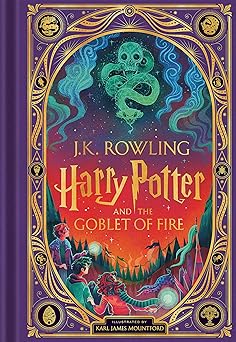
Harry Potter and the Goblet of Fire (Interactive Illustrated Edition) — Full Review


Introduction
The fourth book in J.K. Rowling’s saga, Harry Potter and the Goblet of Fire, marked a decisive turn for the series when it first arrived: the story grows darker, the world grows larger, and the stakes become unmistakably real. This Interactive Illustrated Edition, featuring the artwork of Karl James Mountford, invites readers to revisit that pivotal entry with fresh visual life and tactile enhancements. Whether you’re returning to Hogwarts for the thousandth time or encountering the Triwizard Tournament for the first time, this edition aims to deepen immersion — pairing Rowling’s layered storytelling with images and interactive flourishes that amplify mood, character, and spectacle.

Spoiler note
This review discusses major plot points and outcomes. If you prefer to keep key surprises unspoiled, skip the sections titled “Plot overview” and “Standout sequences” until you’ve read the book.

Plot overview (spoilers)
Goblet of Fire follows Harry’s fourth year at Hogwarts, which is dominated by the Triwizard Tournament — an interschool competition that draws champions from Durmstrang and Beauxbatons. Harry is unexpectedly selected as a fourth contestant despite being underage; his forced participation sets off a chain of events that tests friendships, courage, and moral clarity. Along the way readers meet new characters (Mad-Eye Moody, the elegant Fleur Delacour, the enigmatic Viktor Krum), attend the glittering Yule Ball, and follow a trio of high-adrenaline tasks that culminate in a chilling confrontation where the series’ most dangerous threat returns. It’s the book where adolescence, politics, and violence collide — a gateway from childhood adventure to adult peril.

Narrative growth and tone
One of Goblet of Fire’s greatest achievements is how it shifts tone without losing the core that made the earlier books beloved. The humor and wonder remain, but they’re counterbalanced by a deeper seriousness: bureaucratic maneuvering at the Ministry, media distortion in the Daily Prophet, and a creeping realization that choices have painful consequences. Rowling expands her canvas here — the world is no longer contained within Hogwarts’ walls. We see international wizarding customs, the inner workings of wizarding sport and governance, and how youthful impulsiveness can be manipulated by those with darker aims. The novel manages a rare balance: it preserves the emotional accessibility of a children’s story while confidently engaging with themes better suited to adult fiction.

Character development
This is a maturation book for nearly every principal character. Harry’s heroism is complicated; he’s brave yet emotionally raw, increasingly aware of how isolated his experiences can make him. Hermione’s activism becomes more pronounced (a signpost for her moral seriousness later), Ron confronts jealousy and insecurity with painfully human awkwardness, and secondary characters gain new dimensions — the vain and media-oriented Rita Skeeter, the politically timid Cornelius Fudge, and the quietly wounded Cedric Diggory. The emergence of Barty Crouch Jr. and the manipulative uses of disguise underline Rowling’s skillat crafting villains who operate by deception rather than sheer force, which makes them all the more unsettling.

Themes and subtext
Power and responsibility are central. The Tournament is a crucible for bravery, but it also exposes class, national pride, and institutional failure. The novel asks uncomfortable questions: how does a community respond when a dangerous truth returns? Who benefits from denial? There’s also a meditation on adolescence — the pangs of first love during the Yule Ball are rendered with both humor and ache, and they’re juxtaposed against the increasing competence and moral agency required of the characters. The treatment of media manipulation and political cowardice adds a layer of realism that lifts the story beyond fantasy into allegory.

Pacing and structure
At nearly twice the length of previous books, Goblet of Fire could have swollen into excess, but Rowling’s plotting keeps momentum. The central device — selection by the Goblet, the three tasks, and an ultimate revelation in the graveyard — creates a sturdy scaffold. Interludes of school life, investigative threads, and political backdrops are interwoven so the narrative never feels only episodic. The book occasionally luxuriates in atmosphere (the eerie nocturnal scenes, the ball’s glittering details), which is deliberate: tension builds through contrast with moments of levity and teenage life.

Prose and dialogue
Rowling’s prose is precise without being ornate. Descriptions are vivid when they need to be — the icy bite of a task, the heat of competition, the texture of robes and banners — and she writes dialogue with distinct voices, from officious Ministry officials to the urgent, clipped tones of champions. Humor is often situational but lands through character-based quips and the author's knack for observation. Importantly, the prose facilitates illustration: many passages read like cinematic set pieces, making them ideal for visual interpretation.

Standout sequences
The Triwizard Tasks (first with dragons, second in the deep lake, third through the maze) are engineered for spectacle and terror; they’re some of the most imaginative sequences in the series. The Yule Ball is memorable for social detail and emotional missteps. And the return scene in the graveyard — sudden, stark, and ruthlessly effective — is the book’s fulcrum: it redefines the series’ direction and leaves a lasting emotional scar. Rowling times shocks well, so the emotional aftermath carries forward into the final chapters and beyond.

Karl James Mountford’s illustrations and the interactive elements
Mountford’s illustrative approach in this edition is a central selling point. His art tends to emphasize texture, shadow, and facial expression in a way that complements Rowling’s tonal swing from wonder to dread. The characters are rendered with care — not mere likenesses but interpretive images that highlight emotion and mood. In scenes that demand spectacle (the dragon challenge, the lake, the graveyard), the artwork enlarges the sense of scale and danger; in quieter moments (conversations, introspective beats), illustrations provide subtle cues to character interiority.

The “interactive” components — presented here as enhancements to the printed art and layout — serve to make the book feel more cinematic without distracting from the text. Thoughtfully placed foldouts, spot illustrations that bleed into margins, and typographic flourishes can heighten tension and invite readers to linger on pivotal scenes. When interactivity supports the narrative (for instance, by revealing a map that clarifies a task or by showing a panoramic spread of the tournament arena), it enriches understanding. The best interactive editions treat visual features as an interpretive partner to the prose rather than a gimmick; this edition largely respects that principle.

Emotional resonance
What makes Goblet of Fire endure is its emotional honesty. The characters’ triumphs feel earned; their losses cut deep. The book’s more somber moments are not gratuitous but consequential — they alter how readers will perceive every book that follows. This edition underscores those beats: illustrations amplify grief or triumph when needed, but they also allow quieter internal moments to breathe.

Audience and suitability
This is a transitional book: younger readers who began the series at seven or eight should be prepared for darker material and more complex themes. Older readers will find richness in world-building and thematic complexity. The illustrated/interactive nature makes it attractive to collectors and to those who appreciate books as visual objects. It’s also an excellent gateway for visual learners or readers who want a new way to experience a familiar story.

Criticisms and caveats
No edition can alter the book’s occasional indulgence in subplots or the slower stretches that follow the tournament’s setup. Some readers may feel that illustrations impose a fixed visual interpretation, potentially conflicting with long-held mental images. Interactive elements, if overused, risk interrupting narrative flow; in this edition they mostly enhance rather than intrude, but preferences will vary.

Conclusion
Harry Potter and the Goblet of Fire remains one of the most pivotal entries in Rowling’s series — ambitious in scope, rich in emotion, and brave enough to darken its palette. The Interactive Illustrated Edition with Karl James Mountford’s artwork offers a thoughtful, visually engaging companion to the novel’s storytelling power. For fans who want to revisit the Triwizard Tournament with fresh aesthetic lenses or for newcomers seeking a sumptuous physical reading experience, this edition is a satisfying and resonant presentation of a book that changed the series forever.

📖Get The Goblet Of Fire On Amazon!📖

In-Depth Review — Amazon Kindle Paperwhite 16GB (Newest Model)


The newest Kindle Paperwhite represents one of Amazon’s most refined and well-balanced e-readers yet. Advertised as “our fastest Kindle ever,” it brings together a larger 7-inch glare-free display, faster performance, warm lighting options, and multi-week battery life. While it doesn’t reinvent the Kindle, it makes reading smoother, clearer, and more enjoyable for avid readers who value simplicity and focus.

Design and Build
The updated Paperwhite continues the minimalist design that Amazon is known for. The 7-inch screen is larger than previous models but the device remains slim and lightweight, easy to hold for long reading sessions. The matte, soft-touch finish gives it a comfortable grip, and the bezels are thinner, creating a more modern look. The device is water resistant, making it safe for reading near pools, in the bathtub, or at the beach. It feels sturdy and premium, blending style with practicality.

Display and Readability
The upgraded 7-inch, 300 ppi glare-free display is one of the biggest improvements. Text looks crisp and sharp, and contrast has been enhanced, giving pages a paper-like feel. The adjustable warm light allows users to switch between cool white and amber tones, perfect for reading at night without straining your eyes. The display performs excellently in all lighting conditions, especially outdoors in direct sunlight, where it remains clear and easy to read.

Performance and Responsiveness
Amazon’s claim of faster performance holds true in everyday use. Page turns are noticeably quicker, menus load faster, and navigation feels smoother overall. The interface is more responsive, giving the Kindle a livelier feel without compromising battery efficiency. While it still can’t match the speed of tablets or smartphones, it’s the fastest Kindle experience yet and ideal for those who want seamless page flipping and quick library browsing.

Battery Life
Battery longevity remains one of the Paperwhite’s strongest assets. A single charge can last up to several weeks, depending on how much you read and your brightness settings. Even with regular daily use and the front light active, users can expect to recharge only occasionally. The move to USB-C charging is a welcome upgrade, providing faster charging and a universal cable connection that fits modern devices.

Storage, Audio, and Extra Features
The 16GB of internal storage is a generous improvement, offering plenty of space for thousands of books or dozens of audiobooks. The Paperwhite supports Audible audiobooks via Bluetooth, allowing you to connect wireless headphones or speakers for listening on the go. Amazon keeps the interface intentionally simple, free from distractions like apps or notifications, which makes it an excellent device for immersive reading.

Software and Reading Experience
Amazon’s Kindle ecosystem remains unmatched. You get instant access to millions of titles, along with handy features like Whispersync for syncing progress across devices, built-in dictionaries, vocabulary builders, and easy highlighting. The software has seen subtle refinements, including faster library organization and better browsing within collections. The overall reading experience is smooth, quiet, and free from interruptions — exactly what a dedicated e-reader should deliver.

Who It’s For
The new Kindle Paperwhite is designed for people who read frequently and want a distraction-free device. It’s perfect for those who want a lightweight, waterproof, and long-lasting e-reader that can be used comfortably indoors or outdoors. Whether you’re reading novels, nonfiction, or listening to audiobooks, it provides a focused and relaxing experience. Casual readers might find the basic Kindle adequate, but the Paperwhite’s larger screen, warm lighting, and improved performance make it well worth the upgrade for dedicated book lovers.

Limitations and Considerations
While the improvements are meaningful, they’re mostly evolutionary rather than revolutionary. Owners of recent Paperwhite models may not find the upgrade essential unless they specifically want the larger screen or USB-C port. The base model still displays ads on the lock screen unless you pay for an ad-free version, and the price difference between the standard and Signature Edition may not appeal to everyone. However, these are minor drawbacks in an otherwise excellent e-reader.

Final Verdict
The newest Amazon Kindle Paperwhite 16GB refines nearly every aspect of the e-reading experience. It combines a larger, sharper display with faster performance, long-lasting battery life, and a comfortable design that feels built for serious readers. It doesn’t try to do too much — instead, it focuses on doing one thing exceptionally well: making reading enjoyable and effortless. For anyone who reads often and values convenience, portability, and eye comfort, the Kindle Paperwhite continues to be the best all-around e-reader available today.

See The Kindle Paperwhite On Amazon!

The Fall of Heaven: The Pahlavis and the Final Days of Imperial Iran — In-Depth Review

The Fall of Heaven: The Pahlavis and the Final Days of Imperial Iran by Andrew Scott Cooper is a comprehensive and ambitious work of mode...