Showing posts with label Ukraine. Show all posts

Friday, June 12, 2026

The True Meaning of Love: A Novel by Danielle Steel – Review


Danielle Steel has built a career on exploring the emotional strength of ordinary people facing extraordinary circumstances. In her latest novel, The True Meaning of Love, she moves beyond traditional romance and family drama to tell a powerful story set against one of the most significant conflicts of the modern era. Rather than focusing solely on romantic relationships, this novel examines sacrifice, courage, resilience, family bonds, and the many forms that love can take when people are confronted with unimaginable hardship.

Scheduled for release in hardcover on August 11, 2026, The True Meaning of Love is one of Steel's most ambitious works in recent years. Set during the Russian invasion of Ukraine, the story follows several interconnected characters whose lives are forever changed by war.

Overview

The novel begins on February 24, 2022, the day Russia launched its full-scale invasion of Ukraine. What should have been a celebration for an eighteen-year-old ballet student named Vlad instead becomes the beginning of a fight for survival.

As war erupts across the country, Vlad is called to military service while desperately trying to help his girlfriend, Tatyanna, escape the growing danger. Their story intertwines with those of other Ukrainians facing impossible choices. Young mother Yulya struggles with whether to flee with her children or remain beside her family. Elderly citizens Petro and Oxana refuse to abandon their home despite the increasing threat around them. Meanwhile, doctors Sasha and Anton stay behind to care for the wounded as hospitals become targets of attack.

The result is not simply a love story but a portrait of a nation under siege and the individuals who find strength through compassion and determination.

Writing Style

Readers familiar with Danielle Steel's work will immediately recognize her accessible and highly readable style. Steel has never written literary fiction aimed at academic audiences. Instead, she focuses on creating emotionally engaging stories that can be enjoyed by a broad readership.

Her writing remains straightforward and fast-moving. Chapters are relatively short, making the book easy to read in just a few sittings. Steel's greatest strength has always been her ability to create emotional investment in her characters, and that skill is on full display here.

Unlike some of her more romance-focused novels, The True Meaning of Love spends considerable time exploring community, survival, and humanitarian struggles. The romantic elements remain important, but they are only one part of a much larger narrative.

Characters

One of the strongest aspects of the novel is its ensemble cast.

Vlad

Vlad represents the younger generation suddenly forced into adulthood by war. His transformation from student to soldier provides some of the novel's most emotional moments.

Tatyanna

As an orphan and ballet student, Tatyanna embodies innocence disrupted by conflict. Her journey highlights the experiences of countless refugees forced to leave everything behind.

Yulya

Yulya's storyline explores the heartbreaking choices many parents face during wartime. Her determination to protect her children creates some of the book's most relatable emotional conflicts.

Sasha and Anton

The medical professionals at the center of the story provide a compelling perspective on the humanitarian side of war. Their efforts to save lives under impossible conditions demonstrate extraordinary courage.

Petro and Oxana

The elderly couple serves as a reminder that war affects every generation. Their refusal to abandon their home gives the novel additional emotional depth.

Together, these characters create a broad picture of life during wartime while maintaining personal and intimate stories that keep readers engaged.

Themes

The Many Forms of Love

The title may initially suggest a traditional romance novel, but Steel uses the concept of love in a much broader sense.

The novel explores:

  • Romantic love
  • Family love
  • Friendship
  • Community support
  • Self-sacrifice
  • Human compassion

The central message is that love is often revealed most clearly during times of crisis.

Survival

Virtually every major character faces questions of survival. Some fight on the battlefield, others flee as refugees, and still others remain behind to care for the wounded. These different experiences show how survival takes many forms.

Courage

The novel repeatedly emphasizes that courage is not the absence of fear. Instead, it is the willingness to continue despite fear.

Hope

Despite dealing with tragic subject matter, the story ultimately remains hopeful. Steel balances moments of heartbreak with examples of human kindness and perseverance.

Emotional Impact

Readers should be prepared for a more serious and emotional experience than many of Steel's traditional romances.

The wartime setting naturally brings loss, separation, and tragedy. However, Steel avoids creating a relentlessly bleak atmosphere. Instead, she focuses on how people endure difficult circumstances and find meaning through their relationships with others.

This balance between sorrow and hope is likely to resonate strongly with longtime fans.

Hardcover Edition

The hardcover edition is published by Delacorte Press and contains 256 pages. The physical presentation follows the high production standards typical of Danielle Steel's hardcover releases.

For collectors and longtime Steel readers, the hardcover edition will likely be the preferred format.

Who Should Read This Book?

This novel will appeal to:

  • Danielle Steel fans
  • Readers of historical and contemporary wartime fiction
  • Fans of emotional family dramas
  • Readers who enjoy character-driven stories
  • Those interested in stories about resilience and survival

Readers seeking a lighthearted romance may find the subject matter heavier than expected. However, those willing to engage with a more serious story will likely appreciate the emotional depth.

Final Verdict

The True Meaning of Love appears to be one of Danielle Steel's most meaningful and timely novels in recent years. By placing ordinary people in extraordinary circumstances, Steel explores not only the horrors of war but also the remarkable strength of the human spirit.

The novel expands the definition of love far beyond romance, showing how compassion, sacrifice, loyalty, and courage become lifelines during humanity's darkest moments. While the wartime setting creates tension and heartbreak, the story ultimately remains focused on hope and resilience.

For longtime Danielle Steel readers, this book offers the emotional storytelling they expect while tackling subject matter of greater historical and humanitarian significance. For newcomers, it may serve as an excellent introduction to one of the world's most successful and enduring storytellers.

Rating: 4.5 out of 5 stars

A moving, heartfelt, and uplifting novel that demonstrates how love can survive even amid the devastation of war.

See The True Meaning Of Love On Amazon!

Saturday, October 18, 2025

A Revolution of Common Sense: Book Review


In A Revolution of Common Sense, Scott Jennings delivers a passionate and unapologetic defense of Donald J. Trump and the political movement he represents. Framed as both a chronicle and a declaration of purpose, the book examines Trump’s rise, his reentry into Washington, and what Jennings describes as his mission to restore “common sense” to American politics and to defend Western civilization itself.

Jennings, a conservative commentator and political strategist, approaches his subject with clear admiration. The tone of the book is assertive, direct, and energetic, capturing the spirit of the Trump era as seen from within the movement. Rather than a detached political study, this work positions itself as an insider’s narrative—one that praises the former president’s determination, criticizes entrenched bureaucratic resistance, and champions the populist energy that brought Trump to power.

The title encapsulates Jennings’s thesis: that Washington, in his view, had lost touch with ordinary Americans and the straightforward logic that once guided public life. “Common sense,” as he defines it, means practical, results-oriented decision making unburdened by political correctness or ideological caution. The book argues that Trump’s appeal lies in his ability to voice what many citizens already felt—that government had grown distant from everyday reality and needed a shock to its system.

A major theme of the book is the concept of defending Western civilization. Jennings portrays Trump as a modern defender of traditional values, national sovereignty, and cultural identity in an age of global uncertainty. He contends that the preservation of these values requires courage, defiance of political elites, and a willingness to stand apart from the mainstream. The language is dramatic, emphasizing struggle and conviction, and the narrative often paints the administration’s battles as larger than politics—symbolic of a broader cultural clash.

For readers who already admire Trump or identify with his movement, Jennings’s book is both affirmation and celebration. It offers moments of behind-the-scenes storytelling and a sense of proximity to the political action. Jennings uses his connections within conservative politics to paint a picture of a leader who is both determined and misunderstood, operating within a system that resists his reforms at every turn.

However, the book’s strength as a passionate defense may also be its limitation. Jennings does not attempt to offer an evenhanded assessment. His admiration for Trump is unwavering, and his framing leaves little room for critique or nuance. Readers seeking balanced political analysis or independent verification of key events may find the book more polemic than investigation. The prose often favors intensity and conviction over evidence or reflection.

Despite this, Jennings’s writing is engaging. His pacing keeps the story lively, and his straightforward style matches the “common sense” ethos he praises. The narrative’s vigor makes the book accessible even to those who are only casually interested in politics. Its clear alignment with a particular worldview ensures it will resonate deeply with its intended audience, even as it alienates those who disagree.

A Revolution of Common Sense stands as a reflection of its time—a work meant to energize, rally, and reaffirm rather than persuade skeptics. It fits comfortably within the body of pro-Trump political literature, aiming less to analyze history than to shape its perception. For supporters, it will feel like a validation of long-held beliefs. For critics, it will serve as an example of how the Trump movement continues to define itself through narrative and symbolism.

In summary, Scott Jennings has written a spirited and partisan account of the Trump phenomenon. The book’s power lies in its conviction and its refusal to equivocate. It is not a work of balanced journalism but rather a statement of faith in a political vision that sees itself as restoring order, clarity, and traditional strength to an uncertain age.

For readers aligned with that vision, it may be an inspiring and energizing read. For those outside it, it remains a revealing glimpse into how Trump’s supporters continue to frame his role in America’s ongoing political story.

Get A Revolution Of Common Sense On Amazon!

Tuesday, October 14, 2025

I Am Giorgia: My Roots, My Principles by Giorgia Meloni - Full Review


Overview & Structure

I Am Giorgia: My Roots, My Principles is the English-language edition of the memoir by Giorgia Meloni, translated (in part) by Sylvia Notini and published by Skyhorse. The book runs about 288 pages, and aims to give readers a personal, reflective account of Meloni’s life, values, and political and emotional development.

Meloni frames the memoir not merely as an autobiography but as a statement of identity and principle. She positions herself as a person who has too often been spoken about by others, rather than allowed to speak for herself. Through a mixture of personal recollection, family narrative, reflections on faith and politics, and cultural references, she traces how her early years formed her convictions and prepared her for public life.

The structure is broadly chronological, but interspersed with moments of thematic reflection — on motherhood, identity, faith, and what she views as the tensions of Italian and European politics. The memoir does not confine itself to a “rise-to-power” story; it also attempts to lay out a moral and ideological portrait.


What Works Well: Strengths

1. Personal Voice & Vulnerability

One of the strong elements of the book is Meloni’s willingness to expose emotional vulnerabilities and to narrate personal scars. She writes of her relationship with her mother, her sister, her grandparents, and also of the absence of her father. She recounts episodes of bullying and of being judged on appearance (especially weight, looks) during adolescence. These revelations — while selective — humanize a figure often seen only in political caricature. The emotional backbone of the memoir gives it narrative weight and helps the political persona feel less distant.

2. Clarity of Conviction

Meloni is quite clear about what she believes. She does not shy away from controversial claims or provocative stances. Throughout the memoir she presents her worldview in uncompromising terms: about the primacy of family, of tradition, of sovereignty, and of moral anchors (particularly faith). This coherence (or consistency) of ideological voice may appeal to readers seeking more than a bland or diluted political memoir.

3. Cultural & Pop-Culture Resonances

The memoir is peppered with references to music, literature, pop culture, and even television shows, which serve both to lighten the tone and to reveal Meloni’s manner of thinking. She speaks of listening to Michael Jackson to learn English, or using Tolkien references, or quoting contemporary culture. These touches help situate the text not only in the political realm but in everyday life.

4. Narrative of Overcoming

Meloni crafts a narrative of self-transformation: a “bullied, ordinary girl” from a modest background in Rome, who, through perseverance and conviction, becomes a figure on the national stage. Such a story possesses a classic upward arc, and for many readers it is compelling as a tale of resilience, grit, and moral self-assertion.


What Is More Problematic: Critiques & Omissions

1. Selective Memory & Omitted Context

A major critique is that Meloni’s account is selective. While she speaks candidly about many things, there are significant political and historical issues she largely bypasses or minimizes. For instance, her early association with the Movimento Sociale Italiano (MSI), a post-fascist party in Italy, and the ideological baggage that entails, is not fully confronted. Critics note that she “sidesteps the party’s fascist roots” and does not deeply reckon with that legacy. The memoir adopts an outsider posture vis-à-vis the political establishment, yet conveniently omits or softens parts of her own political genealogy.

She frames her narrative largely as one of defiance against elites, but much less as one of internal dissent, ideological struggle, or reckoning with extremism. For readers who expect a more self-critical or historically grounded reckoning, the omissions may feel glaring.

2. Tension Between Persona & Substance

While Meloni’s personality comes across strongly, in many passages the memoir leans more toward myth-making than granular policy or governance reflection. There is less on the internal workings of government, trade-offs, or detailed political strategy than one might hope from a political memoir by a sitting prime minister. In other words, the political content sometimes lags behind the rhetorical posture.

Some readers may come away wishing for more substantive engagement — more about how she conceives of statecraft, the balancing of political alliances, or the challenges of governing in a fractious coalition environment. The memoir is more about “why I believe” than “how I govern.”

3. Polarizing Tone and Us vs. Them Framing

The style of the book often sets up a sharp opposition between “us” (the people, the rooted, the faithful) and “them” (the elites, the cosmopolitan, the technocrats). This binary tone can lend itself to polemic more than nuance. Critics have observed that Meloni frequently casts conservative values as under siege by a monolithic, dismissive elite. While that tension is genuine in many political debates, the rhetoric occasionally sacrifices complexity for dramatization.

4. Emotional Emphasis Over Analytical Depth

Because the memoir invests so much in emotional narrative and personal history, the analytic or interpretive sections sometimes feel thinner in comparison. Complex topics — immigration, European sovereignty, the varying pressures on national identity — get touched upon, but often in broad strokes rather than in meticulously argued chapters. For those expecting a deeply reasoned policy treatise, the book may feel wanting.


Notable Themes & Motifs

Identity & Belonging

Meloni returns often to her identity as a woman, mother, Italian, Christian. These are not just biographical descriptors but foundational claims. She argues that modern politics has too often stripped identity of its substance, turning democratic citizens into abstract units rather than persons rooted in communities.

Faith & Moral Order

Faith is a central pillar in her worldview. She speaks of religion not as a private matter but as a guiding principle for social cohesion and moral anchor. She views many modern ideologies — secular or liberal — as eroding moral norms and cultural continuity.

Roots, Continuity & Memory

She regards roots (family, regional tradition, historical memory) as critical to a stable society. In her narrative, the dislocated individual in a transnational technocratic world is vulnerable. Thus, her memoir is partly a defense of rootedness — genealogical, cultural, spatial — against what she sees as de-rooting forces.

Resistance to Elites & Populist Undertones

Throughout, there is a posture of resistance: elites are dismissive, distant, condescending; she positions herself as speaking “from below,” as someone outsiders did not expect to succeed. That anti-elite rhetoric is a classic populist idiom. At times, it gives the book its sharp edge; at others, it underwrites the risk of oversimplification.


Readability & Style

The prose is accessible, direct, and occasionally emphatic. Meloni uses anecdote and emotional narrative more than dense policy exegesis. The book moves relatively quickly, aided by interludes of reflection and cultural references. Some readers may find the rhetorical flourishes or occasional hyperbole distracting; others may appreciate the clarity and urgency of her voice.

The translated edition — as all translations must — sometimes smooths over linguistic texture, but the emotional register remains intact. The memoir doesn’t read as a dry or academic text; it is more of a political-literary hybrid.


Audience & Impact

This book is unlikely to convert staunch opponents of Meloni’s politics — it instead crystallizes her brand for supporters and for international observers wanting insight into her moral, psychological, and ideological foundations. For admirers, it offers confirmation: a personal backstory aligned with the convictions she champions. For skeptics, it offers material — both rhetorical and narrative — to critique and engage with.

Its impact may lie less in opening new intellectual terrain and more in giving voice to a figure often caricatured in Western media. It invites readers to see her as more than a political label — as a human who believes deeply (and sometimes contestably).


Verdict

I Am Giorgia: My Roots, My Principles is a striking and evocative political memoir. It succeeds best as a portrait of self — a mixture of confessional storytelling, ideological declaration, and moral posture. Its emotional core and clarity of conviction are compelling.

Yet it is limited by its selective memory, by occasional rhetorical simplifications, and by a relative lack of deep analytical or policy detail. Readers hoping for a richly reasoned political account or a granular treatment of governance may find the book wanting in places.

In sum: for those interested in the personal side of contemporary European politics, in identity, and in the moral dimensions of public life, Meloni’s memoir is a valuable read — vivid, forceful, and unapologetic. But it should also be read critically, with awareness of what is emphasized and what is glossed over.

🕮Find Giorgia Meloni's Book On Amazon!🕮

Thursday, September 25, 2025

In-Depth Review — WW3 Has Begun: Nothing Is Random, Everything Was Scripted (2025–2032). — You Were Never Meant to Know: How the Fall of Europe, the Rise of Asia

Christopher Parson’s WW3 Has Begun arrives as a confident, argumentative work that blends geopolitics, conspiracy theory, and speculative forecasting into a single, polemical volume. The book’s subtitle and marketing position it as an exposé: a grand narrative in which twentieth- and twenty-first-century power shifts are not accidents but the results of long-running, intentional designs. It presents itself as uncovering insider insights, suppressed letters, and military doctrines that allegedly reveal a hidden three-phase war plan stretching back centuries.

What the book sets out to do

Parson’s explicit aim is to persuade readers that the geopolitical changes beginning in the mid-2020s — the collapse or marginalization of Europe and the simultaneous ascent of parts of Asia — are the product of carefully scripted strategies rather than messy, contingent events. The narrative is arranged as both chronological and thematic: a short historical preface, a reconstruction of the alleged plan and its purported architects, and a sequence of case studies that tie present-day crises to that long game. Along the way, Parson mixes reportage-style anecdotes, selective archival claims, and a running interpretive frame that reads recent events as pieces of a single engineered puzzle.

Strengths

Parson is a strong storyteller. He writes with a voice that’s confident, punchy, and designed to keep a reader hooked. The book’s structure — alternating between sweeping claims and granular anecdotes — creates momentum; when he describes events or documents he presents them in cinematic detail. For readers hungry for a single, coherent narrative to explain geopolitical turbulence, that synthesis is satisfying. The book also performs well as a primer in rhetorical persuasion: Parson anticipates objections, plants provocative questions, and uses rhetorical repetition to hammer home his central thesis that nothing about the arc from 2025 to 2032 was random.

Another notable strength is the author’s willingness to interrogate mainstream narratives. Where many policy books hedge in technocratic language, Parson writes in bold strokes and forces readers to confront uncomfortable possibilities about agency and planning behind historic shifts. For those who already view global politics as the product of elite engineering, this book will feel validating and clarifying.

Weaknesses and problems

Where the book shines rhetorically, it falters methodologically. Parson’s evidentiary approach is selective: documents and anecdotes that fit the thesis are given weight, while inconvenient facts receive brief treatment or are interpreted through speculative frames. The book depends heavily on implication and pattern-matching, which risks conflating correlation with causation. Readers looking for rigorous sourcing, exhaustive citations, or transparent provenance for key documents will be frustrated. Claims presented as “insider” revelations are often accompanied by vague sourcing (unnamed officials, undisclosed letters, redacted passages) that make independent verification difficult.

Another problem is tone. The book’s grand conspiratorial contours sometimes shade into hyperbole, which weakens its credibility for skeptical readers. Parson’s insistence on a single scripted plan tends to flatten the complexity of geopolitics: economic incentives, local politics, chance events, and technological change all play roles that are sometimes minimized in pursuit of a cleaner story.

Key themes and recurring arguments

  1. Long-range planning: Parson argues that the geopolitical course from 2025 through 2032 follows a three-phase strategy allegedly conceived by networks of actors over generations. Each phase — destabilization, restructuring, and consolidation — is illustrated with modern events framed as deliberate moves.

  2. The fall of Europe: The book presents Europe as a primary target for marginalization through economic pressure, political fragmentation, and engineered crises. Parson traces policy choices and moments of failure as pieces of an intentional strategy.

  3. The rise of Asia: Counterbalancing Europe’s decline, Parson claims certain Asian powers were positioned — not accidentally — to gain advantage through coordinated political and economic maneuvers.

  4. Information and narrative control: A recurring theme is the manufacture of consent: controlling narratives, suppressing documents, and shaping public opinion are presented as central tactics in the scripted plan.

Style and readability

Parson’s prose is accessible and often brisk, aimed at a general audience rather than specialists. Chapters are relatively short, with emphatic subheadings and vivid anecdotes that make the book easy to read in one sitting. That readability is both a virtue and a danger: the book’s momentum can obscure analytical gaps and the lack of rigorous sourcing. For many readers this tradeoff will be acceptable; for others it will be a dealbreaker.

Who will benefit from this book

This is a book for readers who like sweeping geopolitical narratives, for those intrigued by intelligence-style exposés, and for people who suspect that overt, public explanations seldom tell the whole story. It will also attract readers who enjoy speculative history and who are comfortable with interpretive leaps. Conversely, academics, policy analysts demanding strict sourcing, and readers looking for neutral, balanced assessments of the coming decade of global politics will find the book wanting.

Final assessment

WW3 Has Begun is a provocative, engaging, and unapologetically speculative work. Christopher Parson knows how to tell a compelling story and how to push readers into new interpretive frames. But the book trades epistemic rigor for rhetorical force: its selective sourcing and conspiratorial certainties reduce its persuasiveness for readers who prize verification over narrative coherence. Ultimately, the book succeeds best as a polemic and a narrative scaffold — an invitation to think differently about recent global shifts — rather than as definitive proof that “everything was scripted.”

If you read it expecting a persuasive manifesto that will change the consensus in foreign-policy circles, you will be disappointed. If you read it as a well-crafted, challenging argument that destabilizes comfortable assumptions and encourages further investigation, it delivers.

Find WW3 Has Begun On Amazon!


Tuesday, December 17, 2024

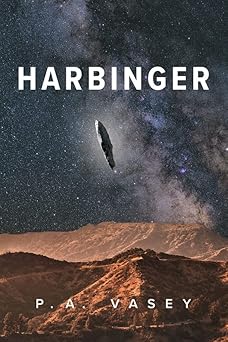
An In-Depth Review of Harbinger by P.A. Vasey


Introduction

In Harbinger, released on July 11, 2023, author P.A. Vasey delivers an intricate and thought-provoking work that seamlessly blends science fiction, existential inquiry, and gripping storytelling. Known for his ability to craft compelling narratives with philosophical undertones, Vasey continues to build his reputation as an author who challenges readers to think deeply while keeping them enthralled. This review explores the thematic richness, character development, and narrative structure of Harbinger, offering insight into why this novel stands out in contemporary science fiction.


Plot Overview

Without delving into spoilers, Harbinger follows a series of events triggered by a mysterious cosmic phenomenon that begins to reshape humanity’s understanding of its place in the universe. The narrative is centered around individuals grappling with the implications of this event—scientists, ordinary citizens, and shadowy organizations alike—as they attempt to decipher its meaning and consequences.

Vasey deftly interweaves personal stories with broader societal concerns, presenting readers with a multi-layered plot that combines scientific intrigue with emotional depth. The story moves at a deliberate pace, allowing the tension to build steadily while introducing thought-provoking concepts about humanity, existence, and the unknown.


Themes and Concepts

One of Harbinger’s most striking features is its exploration of weighty themes such as:

  1. The Unknown and Cosmic Wonder The novel excels at capturing the sense of awe and terror that comes with confronting the incomprehensible. Vasey’s vivid descriptions of the cosmic event serve as a metaphor for humanity’s eternal struggle to understand the universe.

  2. Existential Reflection Beneath its sci-fi exterior, Harbinger poses profound philosophical questions: What is humanity’s place in the vast cosmos? How do we respond when faced with forces beyond our control or understanding? Vasey invites readers to ponder these questions alongside the characters, making the book as much an intellectual experience as an emotional one.

  3. The Intersection of Science and Faith The novel navigates the tension between scientific inquiry and spiritual belief. Characters with different worldviews clash and collaborate, reflecting society’s broader struggle to reconcile reason and faith in the face of existential threats.

  4. Human Nature Under Pressure Vasey examines how individuals and societies react under extraordinary circumstances—fear, unity, greed, and courage all play crucial roles. This adds a psychological dimension to the narrative, elevating it beyond standard genre conventions.


Character Development

Vasey’s characters are well-rounded and relatable, providing emotional anchors in a story filled with abstract and cosmic ideas. Each character brings a unique perspective to the unfolding events, and their personal struggles mirror the larger existential crises posed by the narrative.

  • The Scientist Protagonist: Grounded in logic and reason, the protagonist’s journey is as much about personal transformation as it is about uncovering scientific truths. Vasey avoids clichés, portraying the protagonist’s growth with subtlety and depth.

  • The Skeptic and the Believer: Secondary characters represent opposing philosophical views, adding tension and driving much of the book’s thematic conflict. Vasey uses their interactions to explore the larger human dilemma of knowledge versus belief.

  • Everyday Humans: Through the eyes of ordinary individuals, Vasey offers an intimate look at how global events impact people on a personal level, heightening the stakes of the story.

The dialogue is sharp and authentic, and the relationships between characters feel earned rather than forced. Vasey’s ability to make readers care about these individuals ensures the novel resonates on both emotional and intellectual levels.


Narrative Style and Pacing

Vasey’s prose is elegant and immersive, striking a balance between scientific precision and poetic beauty. His descriptions of the cosmic event are particularly evocative, painting scenes that are both awe-inspiring and terrifying. The pacing is deliberate but never sluggish, allowing readers to absorb the novel’s deeper messages while maintaining a sense of urgency.

The structure of the book—with interwoven narratives and shifting perspectives—mirrors the complexity of the phenomenon at the story’s heart. While some readers may find the pacing slow in the early chapters, the careful buildup ultimately pays off as the stakes escalate and the mysteries deepen.


Strengths

  • Thought-Provoking Themes: Vasey successfully merges science fiction with philosophical inquiry, encouraging readers to reflect on existential questions.

  • Rich Atmosphere: The novel’s atmosphere, blending awe and dread, is palpable and engrossing.

  • Compelling Characters: Vasey’s characters are multifaceted and serve as effective conduits for exploring larger ideas.

  • Scientific Plausibility: The author’s attention to scientific detail enhances the novel’s credibility and immerses readers in its world.


Areas for Improvement

While Harbinger is a standout work, it does have minor flaws:

  • Slow Start: The novel’s meticulous pacing may deter readers seeking immediate action or resolution.

  • Complexity of Ideas: Some of the philosophical and scientific discussions, though fascinating, may feel dense or abstract for readers unfamiliar with these subjects.

That said, these issues are minor compared to the book’s overall achievements.


Conclusion

Harbinger by P.A. Vasey is an exceptional addition to modern science fiction. It is a book that challenges the mind, touches the heart, and sparks the imagination. Vasey’s ability to combine thought-provoking themes with an engaging narrative makes Harbinger a must-read for fans of literary science fiction and existential storytelling.

While its deliberate pacing and intellectual depth may not appeal to every reader, those willing to invest their time will be rewarded with a profound and unforgettable experience. Vasey has crafted a work that not only entertains but also inspires reflection, cementing his place as a noteworthy voice in contemporary speculative fiction.

Find Harbinger By P.A. Vasey On Amazon!

Book Review: America vs Iran: How Trump, Oil, Israel and 70 Years of Betrayal Led to War by History Brought Alive

America vs Iran: How Trump, Oil, Israel and 70 Years of Betrayal Led to War by History Brought Alive is a geopolitical history book that ...