Showing posts with label new release. Show all posts

Friday, June 12, 2026

The True Meaning of Love: A Novel by Danielle Steel – Review


Danielle Steel has built a career on exploring the emotional strength of ordinary people facing extraordinary circumstances. In her latest novel, The True Meaning of Love, she moves beyond traditional romance and family drama to tell a powerful story set against one of the most significant conflicts of the modern era. Rather than focusing solely on romantic relationships, this novel examines sacrifice, courage, resilience, family bonds, and the many forms that love can take when people are confronted with unimaginable hardship.

Scheduled for release in hardcover on August 11, 2026, The True Meaning of Love is one of Steel's most ambitious works in recent years. Set during the Russian invasion of Ukraine, the story follows several interconnected characters whose lives are forever changed by war.

Overview

The novel begins on February 24, 2022, the day Russia launched its full-scale invasion of Ukraine. What should have been a celebration for an eighteen-year-old ballet student named Vlad instead becomes the beginning of a fight for survival.

As war erupts across the country, Vlad is called to military service while desperately trying to help his girlfriend, Tatyanna, escape the growing danger. Their story intertwines with those of other Ukrainians facing impossible choices. Young mother Yulya struggles with whether to flee with her children or remain beside her family. Elderly citizens Petro and Oxana refuse to abandon their home despite the increasing threat around them. Meanwhile, doctors Sasha and Anton stay behind to care for the wounded as hospitals become targets of attack.

The result is not simply a love story but a portrait of a nation under siege and the individuals who find strength through compassion and determination.

Writing Style

Readers familiar with Danielle Steel's work will immediately recognize her accessible and highly readable style. Steel has never written literary fiction aimed at academic audiences. Instead, she focuses on creating emotionally engaging stories that can be enjoyed by a broad readership.

Her writing remains straightforward and fast-moving. Chapters are relatively short, making the book easy to read in just a few sittings. Steel's greatest strength has always been her ability to create emotional investment in her characters, and that skill is on full display here.

Unlike some of her more romance-focused novels, The True Meaning of Love spends considerable time exploring community, survival, and humanitarian struggles. The romantic elements remain important, but they are only one part of a much larger narrative.

Characters

One of the strongest aspects of the novel is its ensemble cast.

Vlad

Vlad represents the younger generation suddenly forced into adulthood by war. His transformation from student to soldier provides some of the novel's most emotional moments.

Tatyanna

As an orphan and ballet student, Tatyanna embodies innocence disrupted by conflict. Her journey highlights the experiences of countless refugees forced to leave everything behind.

Yulya

Yulya's storyline explores the heartbreaking choices many parents face during wartime. Her determination to protect her children creates some of the book's most relatable emotional conflicts.

Sasha and Anton

The medical professionals at the center of the story provide a compelling perspective on the humanitarian side of war. Their efforts to save lives under impossible conditions demonstrate extraordinary courage.

Petro and Oxana

The elderly couple serves as a reminder that war affects every generation. Their refusal to abandon their home gives the novel additional emotional depth.

Together, these characters create a broad picture of life during wartime while maintaining personal and intimate stories that keep readers engaged.

Themes

The Many Forms of Love

The title may initially suggest a traditional romance novel, but Steel uses the concept of love in a much broader sense.

The novel explores:

  • Romantic love
  • Family love
  • Friendship
  • Community support
  • Self-sacrifice
  • Human compassion

The central message is that love is often revealed most clearly during times of crisis.

Survival

Virtually every major character faces questions of survival. Some fight on the battlefield, others flee as refugees, and still others remain behind to care for the wounded. These different experiences show how survival takes many forms.

Courage

The novel repeatedly emphasizes that courage is not the absence of fear. Instead, it is the willingness to continue despite fear.

Hope

Despite dealing with tragic subject matter, the story ultimately remains hopeful. Steel balances moments of heartbreak with examples of human kindness and perseverance.

Emotional Impact

Readers should be prepared for a more serious and emotional experience than many of Steel's traditional romances.

The wartime setting naturally brings loss, separation, and tragedy. However, Steel avoids creating a relentlessly bleak atmosphere. Instead, she focuses on how people endure difficult circumstances and find meaning through their relationships with others.

This balance between sorrow and hope is likely to resonate strongly with longtime fans.

Hardcover Edition

The hardcover edition is published by Delacorte Press and contains 256 pages. The physical presentation follows the high production standards typical of Danielle Steel's hardcover releases.

For collectors and longtime Steel readers, the hardcover edition will likely be the preferred format.

Who Should Read This Book?

This novel will appeal to:

  • Danielle Steel fans
  • Readers of historical and contemporary wartime fiction
  • Fans of emotional family dramas
  • Readers who enjoy character-driven stories
  • Those interested in stories about resilience and survival

Readers seeking a lighthearted romance may find the subject matter heavier than expected. However, those willing to engage with a more serious story will likely appreciate the emotional depth.

Final Verdict

The True Meaning of Love appears to be one of Danielle Steel's most meaningful and timely novels in recent years. By placing ordinary people in extraordinary circumstances, Steel explores not only the horrors of war but also the remarkable strength of the human spirit.

The novel expands the definition of love far beyond romance, showing how compassion, sacrifice, loyalty, and courage become lifelines during humanity's darkest moments. While the wartime setting creates tension and heartbreak, the story ultimately remains focused on hope and resilience.

For longtime Danielle Steel readers, this book offers the emotional storytelling they expect while tackling subject matter of greater historical and humanitarian significance. For newcomers, it may serve as an excellent introduction to one of the world's most successful and enduring storytellers.

Rating: 4.5 out of 5 stars

A moving, heartfelt, and uplifting novel that demonstrates how love can survive even amid the devastation of war.

See The True Meaning Of Love On Amazon!

Friday, December 26, 2025

Book Review: Rites of the Starling (Shield of Sparrows, Book 2) by Devney Perry


Rites of the Starling is the highly anticipated second installment in Devney Perry’s Shield of Sparrows series, continuing the romantasy journey that began with Shield of Sparrows. Released in hardcover on April 7, 2026, the novel builds upon the emotional, magical, and political foundations of the first book while raising the stakes for its heroine and the fractured world she inhabits.

At the heart of the story is Calandra, a princess whose life has been shaped by fear, prophecy, and forces far beyond her control. In this sequel, she finds herself separated from the man she loves and thrust deeper into a cursed realm threatened by an approaching calamity known as the crux migration. Monsters roam the land, alliances are fragile, and survival is never guaranteed. Calandra is hunted, captured, and tested in ways that force her to confront both her limitations and her hidden strengths.

The narrative is driven by transformation. Calandra is no longer simply running from her fate; she is being pushed toward it. Throughout the novel, she must grapple with the roles others demand she accept—queen, weapon, sacrifice—and decide whether she will claim agency over her own destiny. This internal struggle gives the book much of its emotional weight, as her personal growth becomes inseparable from the survival of the five kingdoms.

Devney Perry leans heavily into themes of sacrifice, courage, and identity. Rites of the Starling explores what it means to lead when leadership demands loss, and whether love can endure when duty threatens to destroy it. The title itself reflects this focus on ritual and change, suggesting that the trials Calandra faces are not merely obstacles but necessary rites that will shape who she becomes.

World-building remains one of the novel’s strongest elements. The cursed landscape feels dangerous and alive, filled with myth, ancient magic, and ever-present threats. The looming crux migration serves as both a physical danger and a symbol of inevitable change, reinforcing the story’s sense of urgency. Perry balances this expansive fantasy setting with intimate character moments, ensuring that the emotional core is never lost amid the epic scale.

The romance continues to play a central role, particularly through separation and longing. The distance between Calandra and the man she loves intensifies the emotional stakes and gives her choices greater consequence. Her desire to save him, even at great personal cost, adds a poignant layer to her larger mission and reinforces the novel’s focus on love tested by circumstance.

In terms of pacing, the book alternates between tense, action-driven sequences and quieter, introspective moments. Readers who appreciated the slow-burn emotional style of the first book will likely find this sequel rewarding, as it delves deeply into Calandra’s thoughts and fears. Those who prefer faster plot progression may still find parts of the story deliberate, but the increased danger and broader scope help maintain momentum.

Rites of the Starling is an emotionally rich and ambitious continuation of the Shield of Sparrows series. It deepens the mythology, strengthens the heroine’s arc, and sets the stage for even greater conflicts ahead. For fans of fantasy romance who enjoy character-driven storytelling, high stakes, and a blend of love and magic, this book offers a compelling and immersive experience.

Get Rites Of The Starling On Amazon!

Monday, October 13, 2025

In-Depth Review of We Did OK, Kid: A Memoir by Sir Anthony Hopkins

 We Did OK, Kid: A Memoir by Sir Anthony Hopkins is an introspective and emotional journey through the life of one of the greatest actors of our time. Set for release on November 4, 2025, this hardcover memoir is both a reflection on a life fully lived and a deep look into the personal struggles, artistic triumphs, and hard-won wisdom that shaped Hopkins into the artist and man he is today.

The title, drawn from a phrase Hopkins often uses when looking back at his younger self, sets the tone for the entire book. “We did OK, kid,” he tells that boy from Port Talbot, Wales, as if comforting the uncertain child who never quite fit in. The phrase becomes a refrain throughout the memoir—a mix of self-forgiveness, humility, and gratitude for the road traveled.

From the very beginning, Hopkins’s writing carries the rhythm and authenticity of someone speaking directly to the reader. His tone is conversational, but filled with the poetic weight of a man who has learned to observe life with detachment, empathy, and quiet humor. The memoir traces his journey from a shy, unfocused boy in postwar Wales to a titan of the stage and screen.

The early chapters describe his childhood vividly: the gray industrial landscape, the noise of the steel mills, and the stern discipline of his father. Hopkins recounts feeling like an outsider at school, often dismissed as unmotivated or lazy. Yet even then, a spark was forming. He found solace in drawing, music, and later, acting—forms of expression that allowed him to escape the constraints of his environment.

When he writes about his early acting years, the narrative comes alive with both energy and unease. Hopkins recounts his time training for the stage, the uncertainty of auditions, and his eventual rise under the mentorship of legends like Laurence Olivier. He captures the mixture of terror and exhilaration that comes with live performance, describing moments of triumph and failure alike. What stands out most is his honesty about insecurity—how fame never erased the inner doubt, and how he often viewed acting as both a form of freedom and a kind of madness.

As the memoir moves into his film career, Hopkins reflects on the roles that defined him. He recalls the artistic breakthroughs that changed his life, including the discipline and intensity required for his most iconic characters. Yet rather than boast about success, he dwells on the fleeting nature of fame and the loneliness that often accompanies it. Hopkins reveals that, behind the acclaim, there was always a restless mind—one prone to self-criticism and yearning for stillness.

A major portion of the book deals with his struggle with alcoholism and the long path to recovery. Hopkins’s tone becomes raw and confessional here. He admits to the damage he caused—to relationships, to his own health, and to his peace of mind. His descriptions of addiction are not sensationalized; they are deeply human, full of shame and clarity. His recovery is portrayed not as a single turning point, but as a continuous process of renewal. Sobriety becomes a recurring theme of discipline and grace that mirrors his approach to acting.

In later chapters, Hopkins turns philosophical. He reflects on aging, mortality, and the search for meaning in a life filled with contradictions. He speaks with a kind of quiet acceptance, acknowledging both the beauty and absurdity of existence. He writes about solitude, faith, and the thin line between madness and creativity. These passages are some of the most profound in the book, offering glimpses into the private reflections of a man who has seen the best and worst of himself.

Stylistically, the book moves fluidly between narrative storytelling and poetic meditation. Hopkins’s prose is elegant but unpretentious, alternating between wry humor and profound insight. He does not write like a performer trying to impress, but like a man attempting to tell the truth—no matter how fragmented or contradictory that truth may be. The simplicity of his voice gives his reflections emotional weight.

Throughout the memoir, Hopkins includes intimate moments that reveal the man behind the legend. He recalls small kindnesses from strangers, late-night moments of doubt before major performances, and his ongoing fascination with music and painting. His passion for art remains central to his identity; he sees creativity not as a means to fame but as a lifeline that kept him grounded through decades of turbulence.

One of the most striking elements of We Did OK, Kid is its humility. Hopkins never presents himself as a moral authority or a flawless survivor. Instead, he writes with the perspective of someone who has finally made peace with imperfection. The title’s phrase, repeated near the end of the book, feels like both a message to his younger self and a benediction to the reader: an acknowledgment that we are all flawed, yet still capable of doing “OK” in the end.

There are some limitations to the memoir. Certain episodes—particularly in his film career—are covered briefly, leaving readers wanting more behind-the-scenes detail. Some relationships, including family dynamics and friendships, are treated with brevity, as if Hopkins is reluctant to expose too much. But these omissions also feel intentional, reflecting a man who values privacy and restraint.

Despite its occasional sparseness, the emotional core of the memoir remains powerful. Hopkins succeeds not by recounting every milestone but by capturing the spirit of a lifetime’s reflection. The result is a portrait of an artist who has spent decades learning how to live, forgive, and create without apology.

We Did OK, Kid is not a celebrity tell-all or a chronological resume of success stories. It is a meditation on art, pain, and redemption—a memoir of quiet revelations rather than sensational confessions. Readers who appreciate introspective storytelling will find much to treasure here.

By its end, the book feels like a conversation between past and present selves, between the frightened boy from Wales and the wise elder he became. Hopkins invites readers into that dialogue, encouraging them to look at their own lives and whisper the same words: we did OK, kid.

Overall, We Did OK, Kid is a moving, understated, and deeply human memoir. It’s a reminder that greatness often comes not from perfection, but from persistence, forgiveness, and the courage to keep going. On a five-star scale, it deserves a strong four—rich in authenticity, grounded in experience, and unforgettable in its quiet wisdom.

📕Get We Did OK, Kid On Amazon!📕

Monday, October 6, 2025

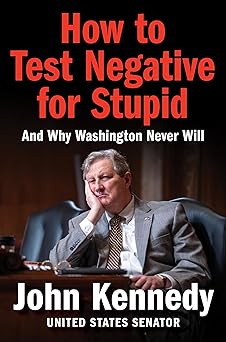
Book Review: How to Test Negative for Stupid: And Why Washington Never Will by John Kennedy


How to Test Negative for Stupid: And Why Washington Never Will is a sharp, humorous, and unapologetically satirical look at American politics from Senator John Kennedy. Released in October 2025, the book dives headfirst into the absurdities of Washington, D.C., offering both laughter and frustration for readers who have long suspected that common sense is the rarest commodity in government.

John Kennedy, known for his quick wit and homespun humor, uses this book to channel his reputation as one of the most quotable figures in modern American politics. His style mixes sharp criticism with country-style wisdom, creating a book that feels part comedy routine, part memoir, and part political roast.


The Book’s Premise

The title itself sets the tone: testing negative for stupidity is a tongue-in-cheek metaphor for keeping your wits about you in a world where irrationality seems to rule. Kennedy opens with a straightforward observation—Washington is broken—and then spends the book explaining why it will likely stay that way. His thesis is that the capital is filled with people who are smart in appearance but foolish in practice, and the system itself rewards that kind of dysfunction.

From there, the book unfolds in a series of essays and vignettes. Each section is short, snappy, and loaded with one-liners that make it easy to pick up and read in small bursts. Kennedy doesn’t bog the reader down in policy jargon or statistics. Instead, he uses humor and anecdote to point out the hypocrisy and illogic that define much of modern politics.


Style and Tone

Kennedy’s writing is exactly what one would expect if they’ve ever heard him speak. His trademark wit, country charm, and deliberate delivery translate seamlessly to the page. Nearly every page features a memorable line or humorous observation, such as:

These lines give the book an energy that keeps the reader smiling even when the subject matter—government failure and incompetence—could easily become depressing. The humor works as a release valve for the frustration so many Americans feel toward politics.


Content and Themes

The core theme of the book is that common sense is nearly extinct in Washington. Kennedy argues that the federal government’s dysfunction is not merely a product of bad leadership, but of a culture that rewards appearances over results. Bureaucrats, lobbyists, and politicians alike are trapped in a system that values clever soundbites more than real solutions.

Each essay seems to circle back to a few recurring ideas:

  1. The arrogance of elites – Kennedy takes aim at the professional political class, accusing them of losing touch with ordinary Americans.

  2. Government overreach and incompetence – He illustrates, often with humor, how bloated bureaucracy and poor decision-making lead to absurd outcomes.

  3. The triumph of image over substance – In a media-saturated environment, performance matters more than progress.

  4. The wisdom of everyday people – Kennedy continually reminds the reader that ordinary citizens often possess more practical sense than those running the country.

His tone is cynical but not hopeless. While he doesn’t pretend that Washington can be easily fixed, he suggests that staying informed, skeptical, and grounded in common sense is the best way for citizens to “test negative for stupid” themselves.


Humor with an Edge

One of the greatest strengths of this book is its humor. Kennedy’s style of comedy is not slapstick or mean-spirited; it’s observational, dry, and grounded in truth. He draws comparisons between Washington and dysfunctional workplaces, between politicians and bad actors in a comedy of errors. His metaphors often borrow from rural life—pigs in creeks, broken fences, and leaky barns—making his critiques both vivid and relatable.

This approach gives the book a unique balance. Readers laugh even as they wince in recognition of the truths he points out. It’s a reminder that humor can often convey political insight more effectively than anger.


The Author’s Perspective

As a sitting senator, Kennedy writes from an insider’s vantage point. He’s not merely mocking the system from the outside; he’s been part of it long enough to understand its inner workings. He shares anecdotes from his experiences in Congress and from Louisiana politics, often highlighting moments that reveal the absurd logic behind political decision-making.

This insider perspective makes the satire bite a little harder. It’s one thing to hear a journalist or commentator complain about Washington; it’s another to hear a senator describe how the sausage really gets made. At the same time, Kennedy’s participation in the system opens him to criticism—some readers may question whether a politician can truly lampoon Washington without implicating himself.


Strengths of the Book


Weaknesses of the Book


Audience and Appeal

This book will likely resonate most with readers who are already disillusioned with Washington and enjoy political humor that calls out hypocrisy across the spectrum. It’s written for those who want to laugh at the madness of politics rather than drown in frustration over it.

Casual readers will enjoy its easy readability, while politically engaged audiences will appreciate its sharpness and wit. Those seeking academic or policy-heavy insights, however, might prefer a different kind of book.


Final Thoughts

How to Test Negative for Stupid: And Why Washington Never Will succeeds as a funny, biting commentary on the state of American politics. It’s part satire, part memoir, and entirely entertaining. John Kennedy’s folksy humor and blunt delivery make the book a refreshing break from dry political prose.

While it may not change minds or solve problems, it does what good satire should—it makes readers think while they laugh. Kennedy reminds us that the best defense against political nonsense is a good sense of humor and the ability to recognize stupidity when we see it.

Overall Rating: 4 out of 5.
A witty, irreverent, and thoroughly enjoyable look at Washington’s never-ending circus, written by one of its most colorful ringmasters.

Find John Kennedy's Book On Amazon!

Book Review: America vs Iran: How Trump, Oil, Israel and 70 Years of Betrayal Led to War by History Brought Alive

America vs Iran: How Trump, Oil, Israel and 70 Years of Betrayal Led to War by History Brought Alive is a geopolitical history book that ...