Showing posts with label biblical. Show all posts

Thursday, April 16, 2026

The Next War (Volume 1) – A Deep Dive into Prophecy, Politics, and High-Stakes Fiction


Introduction

The Next War (Volume 1) by Amir Tsarfati and Steve Yohn launches readers into a gripping blend of geopolitical thriller and biblical prophecy. As the opening installment in The Nir Tavor Tribulation Series, this novel sets an ambitious tone, merging modern warfare, intelligence operations, and end-times speculation into a fast-paced narrative.

This is not just another military thriller—it is a story deeply rooted in theological themes, designed to appeal to readers who enjoy suspense with a prophetic edge.

Plot Overview

The novel begins in a world shattered by a mysterious global event known as “The Disappearance,” where millions of people suddenly vanish. The aftermath is catastrophic, particularly for the United States, whose infrastructure collapses under the strain.

In the resulting power vacuum, a coalition of nations emerges with a unified hostility toward Israel. As tensions escalate, Israeli intelligence agencies detect growing military threats along their borders, hinting at a large-scale conflict that may tie directly to ancient biblical prophecies—specifically those found in the Book of Ezekiel.

At the center of the story is Mossad agent Nir Tavor, a seasoned operative grappling with personal loss while facing what could be Israel’s greatest existential threat. Tasked with countering an overwhelming enemy force, Nir and his team must navigate espionage, warfare, and faith in a race against time.

Writing Style and Narrative Approach

Tsarfati and Yohn deliver a narrative that is both cinematic and purposeful. The pacing is brisk, with short, tension-filled chapters that keep the story moving forward. Action sequences are interwoven with political intrigue and moments of reflection, giving the book a layered feel.

One of the defining aspects of the writing is its clarity. The authors avoid overly complex prose, opting instead for direct, accessible language that broadens the book’s appeal. This makes it easy to follow even when the plot delves into geopolitical complexities.

The dialogue is functional and often carries the weight of exposition, particularly when discussing prophecy or military strategy. While this occasionally feels instructional, it aligns with the book’s dual purpose as both entertainment and a vehicle for theological ideas.

Themes and Core Concepts

Biblical Prophecy Meets Modern Warfare

The most distinctive element of The Next War is its integration of biblical prophecy into a contemporary setting. The narrative heavily references the prophetic war described in Ezekiel, framing current global events as a precursor to a divinely foretold conflict.

This approach gives the story a unique identity, separating it from standard military thrillers. Readers who are familiar with biblical prophecy will find deeper meaning in the events, while others may view it as an intriguing speculative framework.

Global Instability and Power Vacuums

The collapse of the United States serves as a catalyst for the story’s central conflict. The authors explore how quickly global order can unravel and how new alliances can form in the absence of a dominant power.

This theme resonates strongly in today’s geopolitical climate, adding a layer of realism that enhances the tension.

Personal Loss and Duty

Nir Tavor is not just a soldier; he is a man shaped by tragedy. His personal loss adds emotional weight to the narrative, grounding the larger, more abstract themes in human experience.

His struggle between duty and grief is a recurring thread, giving readers a character to connect with amid the broader chaos.

Character Development

Nir Tavor stands out as a capable yet relatable protagonist. He is portrayed as highly skilled but not invulnerable, and his emotional depth adds credibility to his actions.

Supporting characters, including fellow operatives and military figures, serve primarily to advance the plot. While they may not receive extensive development in this first volume, they help establish the world and set the stage for future installments.

The emphasis is clearly on the mission and the unfolding global crisis rather than deeply exploring every character.

Strengths

One of the book’s greatest strengths is its premise. The combination of real-world military strategy and biblical prophecy creates a compelling and original narrative hook.

The pacing is another highlight. The story moves quickly, maintaining tension without becoming overwhelming. Action scenes are engaging, and the stakes feel consistently high.

Additionally, the authors’ background knowledge adds authenticity to the depiction of intelligence operations and regional conflict.

Weaknesses

While the concept is strong, the execution may not appeal to every reader. The heavy emphasis on prophecy can feel overt at times, especially for those looking for a purely secular thriller.

Character development, outside of Nir, is somewhat limited. Readers who prefer deeply layered ensembles may find this aspect lacking.

There are also moments where exposition slows the narrative, particularly when explaining theological or geopolitical concepts. While informative, these sections can interrupt the flow of the story.

Overall Impression

The Next War (Volume 1) is a bold and engaging start to a series that aims to blend faith-based themes with high-stakes fiction. It succeeds in creating a sense of urgency and intrigue, driven by a unique premise that stands out in the crowded thriller genre.

This is a book that knows its audience and delivers exactly what it promises: a suspenseful, thought-provoking story that connects current events with ancient prophecy.

Who Should Read This Book

This novel is best suited for readers who enjoy:

Readers looking for purely action-driven stories without religious elements may find the focus on prophecy less appealing, but those open to that perspective will likely find the book compelling.

Final Verdict

The Next War (Volume 1) is a gripping, fast-paced thriller with a distinctive voice and a clear thematic focus. It may not be for everyone, but for its intended audience, it delivers a powerful and engaging reading experience.

As the opening chapter in The Nir Tavor Tribulation Series, it lays a solid foundation and leaves plenty of room for the story—and its stakes—to grow in future volumes.

See The Next War (Volume 1) On Amazon!

Sunday, October 12, 2025

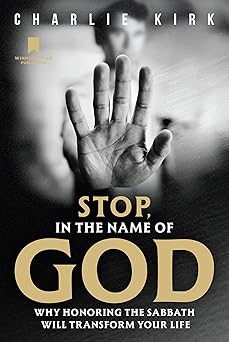
Stop, in the Name of God: Why Honoring the Sabbath Will Transform Your Life by Charlie Kirk – Full In-Depth Review


Charlie Kirk’s Stop, in the Name of God: Why Honoring the Sabbath Will Transform Your Life explores the ancient and often neglected idea of Sabbath rest in a world consumed by endless activity. The book positions the Sabbath not as a relic of the past, but as a powerful antidote to modern exhaustion, disconnection, and digital overload. It argues that by reclaiming a day of rest, readers can restore their peace, deepen their faith, and renew their relationships.


Overview

In this book, Kirk urges readers to rediscover the divine rhythm of rest that has been present since the creation of the world. He frames the Sabbath as an act of obedience to God, but also as a gift — a sacred pause designed to restore the soul. Instead of seeing rest as laziness or weakness, Kirk reframes it as an act of strength and trust. To stop working, he suggests, is to declare that life is not sustained by endless striving but by divine provision.

Kirk’s central argument is that honoring the Sabbath is a radical and liberating act in today’s world. Where modern life demands constant engagement, productivity, and motion, Sabbath rest becomes an act of resistance — a spiritual protest against the tyranny of busyness. Through this act, people can find freedom, clarity, and renewed purpose.


Themes and Structure

The book moves through several key themes that guide readers from understanding the concept of Sabbath to practically living it out:

  1. The Biblical Foundation of Rest
    Kirk begins by grounding the practice of Sabbath in the biblical creation story. He highlights how God rested on the seventh day and sanctified it, not because He was tired, but to set an example for humanity. The author draws connections between this divine rest and human need for renewal, showing that Sabbath was woven into the fabric of creation itself.

  2. The Crisis of Constant Activity
    A major portion of the book addresses modern life’s addiction to busyness. Kirk critiques the cultural obsession with productivity and the constant pressure to be connected. He explains how the endless pursuit of achievement has led to anxiety, burnout, and a spiritual emptiness that cannot be filled through accomplishment alone.

  3. Sabbath as Rebellion
    Kirk portrays Sabbath-keeping as a countercultural act. To unplug from technology, step back from social media, and refrain from work is, in his view, a form of rebellion against a culture that equates worth with output. In doing so, people reclaim their identity as human beings rather than human doings.

  4. Practical Sabbath Living
    One of the book’s strengths is its emphasis on practicality. Kirk offers ways to prepare for Sabbath, create boundaries with work and technology, and cultivate spiritual and relational renewal during that time. He encourages families to share meals, engage in worship, and enjoy simple pleasures without distraction. The focus is on making the Sabbath a life-giving routine, not a rigid rule.

  5. Personal and Cultural Renewal
    The author also explores how Sabbath observance can transform not only individuals but entire communities. He argues that a society built on endless work and consumption needs a moral recalibration — one that begins with slowing down. The Sabbath, he suggests, has the potential to heal fractured relationships, reduce stress, and restore balance to both personal and cultural life.


Strengths

Stop, in the Name of God succeeds in making the Sabbath relevant to contemporary readers. Its message of rest, reflection, and spiritual renewal resonates deeply in a world suffering from fatigue and disconnection. The writing style is direct and persuasive, blending theology with personal conviction.

Kirk’s ability to translate an ancient religious commandment into a modern lifestyle principle is one of the book’s greatest achievements. He avoids overly complex theology and instead focuses on the lived experience of Sabbath — what it feels like to stop, breathe, and trust that the world can continue without our constant effort.

Another strength is the book’s holistic approach. It does not reduce Sabbath to a mere religious ritual but presents it as a practice that benefits the body, mind, and soul. Kirk connects rest with mental health, family relationships, and personal identity, showing that spiritual practices can have tangible, everyday benefits.


Potential Weaknesses

While the book is powerful in its message, it may face challenges depending on the reader’s perspective. For those expecting deep theological analysis, it might feel more motivational than scholarly. The emphasis on practical living could leave some readers wanting a deeper exploration of scriptural nuance or historical interpretations of Sabbath.

There is also the question of accessibility. While the book encourages everyone to honor the Sabbath, not all readers have the same ability to fully “stop” — especially those in demanding jobs, healthcare, or service industries. Some may find it difficult to apply the principles without flexibility or adaptation. The book’s effectiveness will depend on how well it balances idealism with practical understanding of real-world limitations.

Additionally, Kirk’s strong personal views and public persona may influence how readers receive the book. Those who already respect his perspective will likely find it compelling, while others may approach it with skepticism. However, the message of rest and spiritual renewal transcends political or ideological divides, and readers open to that message will find much value in it.


Impact and Takeaways

The book’s core impact lies in its invitation to slow down. It gives readers permission to pause in a world that glorifies hustle and performance. The practical advice can lead to real change: fewer distractions, deeper relationships, and greater peace. By making the Sabbath a consistent part of life, readers may find themselves reconnected with what truly matters — faith, family, and purpose.

The larger cultural message is also significant. Kirk’s call to honor the Sabbath is not just about individual rest but about reclaiming collective balance. If more people embraced the rhythm of work and rest, society itself might become less fragmented, less anxious, and more humane.


Final Thoughts

Stop, in the Name of God is both a spiritual challenge and a comforting guide. It asks readers to confront the uncomfortable truth that busyness often masks emptiness, and that constant striving can erode joy. Through reclaiming Sabbath rest, the book offers a path toward renewal that feels both ancient and urgently modern.

Charlie Kirk’s message is simple yet profound: stopping is not weakness, but wisdom. Rest is not the enemy of progress, but its foundation. In a world desperate for peace, this book provides a timely and practical reminder that the key to transformation may not be in doing more — but in learning to stop.

🕮Get Stop, In The Name Of God On Amazon!🕮

The Next War (Volume 1) – A Deep Dive into Prophecy, Politics, and High-Stakes Fiction

Introduction The Next War (Volume 1) by Amir Tsarfati and Steve Yohn launches readers into a gripping blend of geopolitical thriller an...