Introduction
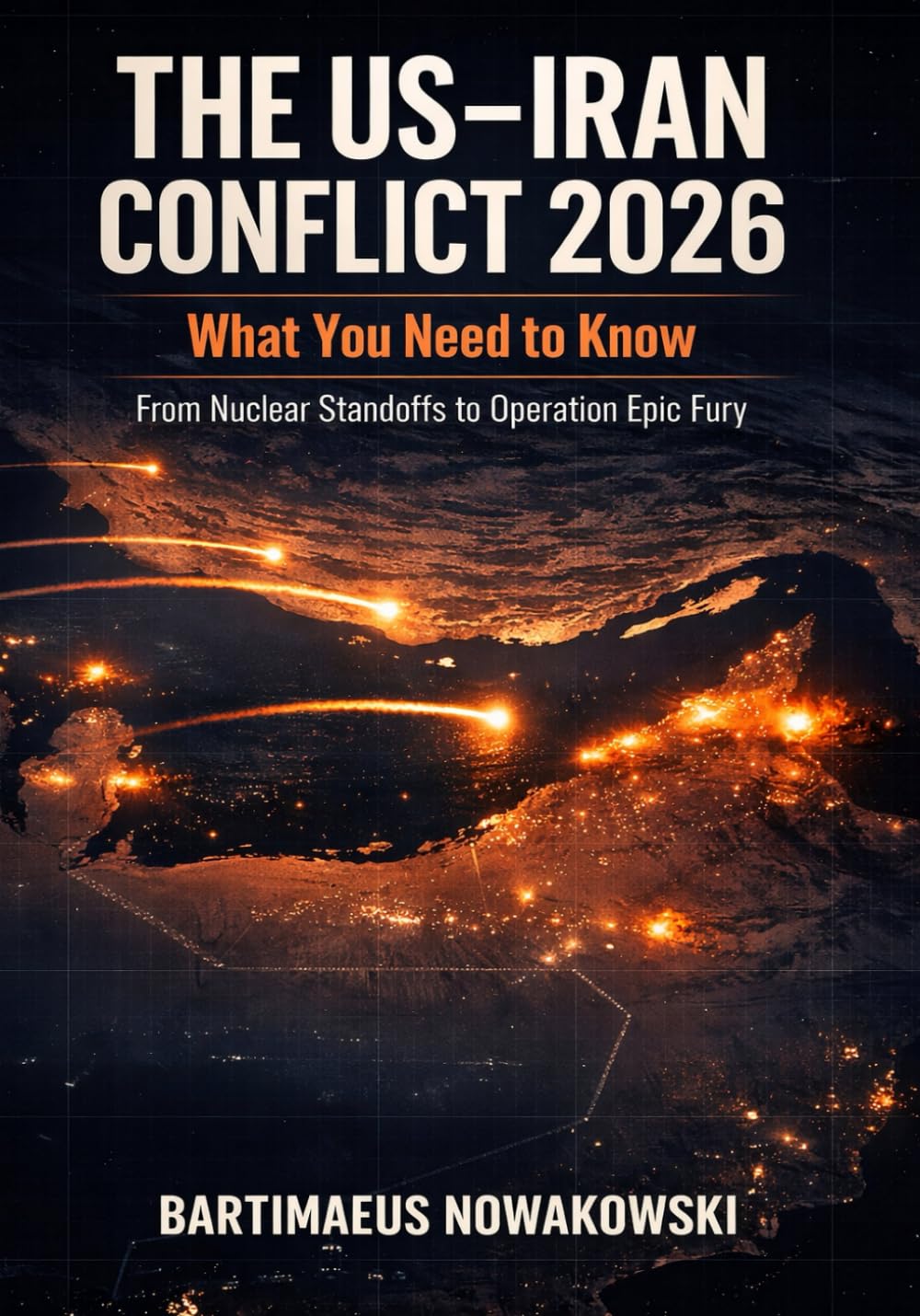
The US-Iran Conflict 2026: What You Need to Know, From Nuclear Standoffs to Operation Epic Fury is a contemporary geopolitical book that seeks to explain the historical tensions, political decisions, military developments, and global consequences surrounding a hypothetical or speculative conflict between the United States and Iran. Written for general readers rather than policy experts, the book combines history, current affairs, military analysis, and international relations into a highly accessible narrative.
At its core, the book aims to answer a simple but important question: How could decades of tension between the United States and Iran evolve into a direct military confrontation? Through a combination of historical background and scenario-based analysis, Bartimaeus Nowakowski presents readers with a comprehensive overview of one of the world's most volatile geopolitical relationships.
Book Overview
The book begins by examining the long and complicated history between the United States and Iran. Rather than treating the conflict as a modern issue that emerged overnight, the author traces the roots of hostility back decades. Key political events, diplomatic breakdowns, sanctions, regional conflicts, and nuclear disputes are all discussed as contributing factors to the growing divide between the two nations.
As the narrative progresses, the focus shifts toward the fictional or speculative Operation Epic Fury, a military campaign that serves as the central event of the book. The author explores how strategic decisions, intelligence assessments, and political pressures could potentially lead to military action and regional escalation.
The book is structured in a way that allows readers to understand both the historical causes and potential consequences of such a conflict. Each chapter builds upon the previous one, creating a clear progression from diplomatic tensions to open confrontation.
Writing Style
One of the strongest aspects of the book is its approachable writing style. Geopolitical topics often become bogged down in technical terminology and policy jargon, but Nowakowski makes a conscious effort to explain complex concepts in plain language.
The prose is straightforward and engaging. Readers who may not have extensive knowledge of Middle Eastern politics or international relations can follow the discussion without difficulty. Technical concepts such as nuclear enrichment, sanctions, deterrence, proxy warfare, and strategic alliances are presented in a way that remains understandable without oversimplifying the issues.
The author's style often resembles that of a knowledgeable commentator explaining current events rather than an academic writing for specialists. This makes the book accessible to a broad audience.
Historical Analysis
The historical sections are among the most valuable parts of the book. Before discussing the 2026 conflict scenario, the author spends considerable time examining the events that shaped U.S.-Iran relations.
The book highlights how decades of mistrust, competing strategic interests, ideological differences, and regional rivalries created a foundation for recurring tensions. Rather than assigning blame to a single side, the author attempts to present the motivations and perspectives of multiple actors involved in the conflict.
These chapters provide readers with important context that helps explain why diplomatic solutions have often proven difficult to achieve. The historical narrative demonstrates how past events continue to influence present-day decision-making.
For readers unfamiliar with the subject matter, these sections offer a useful introduction to one of the most important geopolitical rivalries of the modern era.
Coverage of the Nuclear Issue
The nuclear dispute receives significant attention throughout the book. The author recognizes that understanding Iran's nuclear ambitions and the international response to them is essential for understanding the broader conflict.
Complex topics such as uranium enrichment, nuclear inspections, international agreements, and deterrence theory are broken down into understandable terms. Readers without technical backgrounds can easily follow the explanations and understand why nuclear concerns have remained at the center of international discussions regarding Iran.
The book does an effective job illustrating how nuclear negotiations, sanctions, and diplomatic agreements have influenced relations between Iran and Western powers over the years.
This section is particularly valuable because it explains not only the technical aspects of the issue but also the political calculations that drive decision-making on all sides.
Operation Epic Fury
The centerpiece of the book is its examination of Operation Epic Fury. These chapters transform the book from a historical overview into a detailed exploration of modern conflict.
The author describes how military operations could unfold, the objectives behind strategic strikes, and the potential responses from Iran and its regional allies. The narrative explores military planning, intelligence assessments, and the challenges of conducting operations in an increasingly interconnected world.
What makes these chapters especially compelling is the author's emphasis on escalation. Rather than presenting warfare as a series of isolated battles, the book demonstrates how limited military actions can rapidly expand into wider regional conflicts.
Cyber warfare, economic disruption, proxy forces, and information campaigns are all discussed as critical components of modern warfare. This broader perspective helps readers understand that contemporary conflicts extend far beyond traditional battlefields.
Economic and Global Impact
A major strength of the book is its focus on the wider consequences of conflict.
The author emphasizes that a major confrontation between the United States and Iran would not be confined to the Middle East. Instead, it would have far-reaching implications for the global economy, energy markets, international trade, and diplomatic relations.
The discussion of oil production, shipping routes, and international supply chains is particularly effective. Readers gain a clear understanding of how events occurring thousands of miles away could affect fuel prices, inflation, consumer goods, and financial markets worldwide.
These chapters help demonstrate why geopolitical conflicts remain relevant even to individuals who may not closely follow international affairs.
Character of the Analysis
Throughout the book, Nowakowski attempts to maintain a balanced perspective. The analysis generally focuses on strategic decisions, political realities, and historical developments rather than ideological arguments.
The author presents various viewpoints and examines the motivations of different governments and actors involved in the conflict. While some readers may disagree with specific conclusions or interpretations, the overall tone remains informative rather than overtly partisan.
This balanced approach enhances the book's credibility and makes it useful for readers seeking to better understand the complexities of the situation.
Strengths
Accessible and Easy to Read
The book succeeds in making complex geopolitical issues understandable for general audiences. Readers do not need prior expertise to follow the discussion.
Strong Historical Context
The historical chapters provide valuable background information that helps explain the origins of modern tensions.
Engaging Narrative
The author's storytelling approach keeps the material interesting while still delivering substantial information.
Comprehensive Scope
The book covers military, political, economic, and diplomatic dimensions of the conflict rather than focusing on a single aspect.
Relevant Subject Matter
The themes explored remain highly relevant to contemporary discussions surrounding international security and regional stability.
Weaknesses
Limited Academic Depth
Readers seeking extensive scholarly analysis may find certain topics covered too briefly.
Speculative Elements
Because the book focuses on a hypothetical conflict scenario, some conclusions inevitably rely on assumptions and projections rather than established historical facts.
Simplification of Complex Issues
In striving for accessibility, some nuanced debates and competing interpretations receive less attention than they might in more specialized works.
Who Should Read This Book?
This book is particularly well suited for:
- General readers interested in international affairs
- Students studying politics, history, or global security
- Readers seeking an introduction to U.S.-Iran relations
- Individuals interested in military strategy and modern warfare
- Anyone looking to better understand the global implications of regional conflicts
Those seeking highly technical military analysis or academic-level scholarship may find the book more introductory than comprehensive.
Final Verdict
The US-Iran Conflict 2026: What You Need to Know, From Nuclear Standoffs to Operation Epic Fury succeeds as an informative and accessible guide to a complex geopolitical subject. Bartimaeus Nowakowski effectively combines history, political analysis, military strategy, and economic considerations into a narrative that is both educational and engaging.
The book's greatest strength lies in its ability to explain difficult concepts in language that ordinary readers can understand while still maintaining enough depth to provide meaningful insight. Although it does not offer the exhaustive detail of an academic study, it accomplishes its primary goal of helping readers understand how geopolitical tensions can evolve into major international crises.
For readers interested in contemporary global affairs, military strategy, and Middle Eastern politics, this book provides an informative and thought-provoking examination of one of the world's most significant geopolitical flashpoints.


